1903 Nobel Prize in Physics(2)
Reason for Award
for their joint researches on the radiation phenomena discovered by Professor Henri Becquerel
Laureates
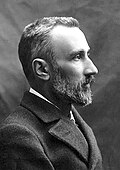
 France

France
Explanation
Pierre and Marie wanted to learn more about where Becquerel’s radioactivity came from. They dissolved and chemically separated tons of ore to search for substances with stronger radiation. In doing so, they discovered two new elements: polonium and radium. Radium’s radioactivity is thousands of times stronger than uranium’s and even makes the material glow faintly in the dark. They also invented special instruments (electrometers) to measure the radiation precisely. Their work proved that atoms can change and release energy, greatly advancing science and medicine.
Related Keywords
radium
Radium, atomic number 88, is an alkaline earth metal discovered by the Curies in 1898. It occurs only in trace amounts within uranium ores, and its isotope Ra-226 has a half-life of about 1,600 years. The decay emits intense α and γ radiation, giving radium a specific activity high enough to glow and self-heat. In the early 20th century it was widely used for cancer therapy and luminous paint, but today its use is strictly controlled due to radiation hazards. Radium research first revealed nuclear energy density and demonstrated radiation’s potential for medical applications, bridging basic science and technology.
polonium
Polonium, atomic number 84, was discovered in 1898 and named after Marie Curie’s homeland, Poland. Its isotope Po-210 has a half-life of about 138 days and emits potent α radiation. Because even minute quantities release substantial energy, it has seen niche uses such as static-elimination brushes and satellite heat sources. It is extremely toxic, causing severe biological damage upon internal exposure, so handling requires rigorous shielding and containment. The discovery of polonium indicated that many unknown radioactive elements might exist in nature, accelerating research on decay series.
electrometer
An electrometer measures very small voltages or currents; the Curies combined it with an ionization chamber to quantify radiation. The quartz-leaf electrometer reads optical displacement of a thin leaf bent by electrostatic force, reaching sensitivities around 10^-11 amperes. This enabled the use of radioactive activity of trace elements as a guide during chemical separations. Electrometer technology became a foundation for later radiation detectors such as Geiger counters and scintillation devices. Modern detectors employ photomultiplier tubes or semiconductors, yet their operating principles trace back to the Curies’ precise electrical measurements.
atomic transmutation
Atomic transmutation refers to the process in which the nucleus of one element decays into that of another. The Curies’ work demonstrated natural nuclear transmutation, scientifically overturning the age-old idea of element immutability. The concept progressed to Rutherford’s α-particle scattering and artificial nuclear reactions, laying the foundation for modern nuclear engineering. The mass deficit accompanying transmutation is tied directly to the vast energy release expressed by Einstein’s E=mc^2. Today atomic transmutation is exploited in medical isotope production, nuclear power, and fundamental particle research.
radiotherapy
Radiotherapy is the use of radiation to destroy cancer cells; its origins trace back to the Curies’ radium needle treatments. Radiation damages DNA and inhibits cell division, suppressing tumor growth. Modern techniques like IMRT and proton therapy deliver dose with high precision, reducing side effects. Treatment planning involves collaboration between physicists and physicians, combining dose distribution simulations with clinical assessment. Knowledge accumulated over a century since the Curies has made radiotherapy a major modality in cancer treatment.