1904 Nobel Prize in Physics
Reason for Award
for his investigations of the densities of the most important gases and for his discovery of argon in connection with these studies
Laureates
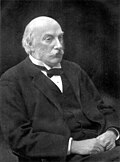
 United Kingdom of Great Britain and Northern Ireland
Explanation
Air is an invisible mixture of gases, and it is so light that weighing it is tricky. Lord Rayleigh compared the weights of balloons filled with different gases to measure how heavy each gas is. While doing this, he noticed that the nitrogen taken from air was slightly heavier than pure nitrogen made in the laboratory, hinting that an unknown gas was mixed in. He separated the mystery gas and called it argon. Argon does not burn, has no color, and almost never reacts with anything, and thanks to Rayleigh we now learn about it in science class.
Related Keywords
argon
Argon is a noble-gas element with symbol Ar and atomic number 18, comprising about 0.93 % of Earth’s atmosphere. Its name comes from the Greek word for idle, reflecting its extraordinarily low chemical reactivity. Because it glows violet-blue in electric discharge, argon is widely used in fluorescent lamps and plasma displays. Liquid argon serves as a cryogenic medium and scintillator in particle detectors for neutrino and dark-matter experiments. As a reference gas in planetary-atmosphere analysis, it also offers clues to cosmic chemical evolution.
gas density measurement
Classical gas-density measurement fills a fixed-volume vessel with gas after evacuation and weighs the difference. Because small temperature or pressure shifts cause large errors, isothermal baths and mercury manometers for precise pressure control are required. Rayleigh combined a magnetic balance with calibrated weights to read mass differences down to 10⁻⁴ grams. Modern techniques include vibrating-tube densitometers and acoustic-velocity methods that allow non-destructive measurements. Knowing gas density enables calculation of molecular weight and mixture ratios, benefiting meteorology, chemical industry, and environmental monitoring.
composition of air
Earth’s atmosphere consists mainly of 78 % nitrogen and 21 % oxygen, with the remaining fraction containing argon, carbon dioxide, water vapor, and trace gases. Until the late 19th century, little attention was paid to constituents other than nitrogen and oxygen. Identification of argon by Rayleigh and Ramsay established that air is not a simple two-component system. Subsequent isolation of neon, krypton, and other noble gases from air completed Group 18 of the periodic table. Modern climate studies and pollution monitoring rely on these precise composition data.
molecular weight
Molecular weight is the relative mass of a single molecule and can be calculated from gas density or vapor pressure data. Rayleigh inferred that an unknown component in air was raising the apparent molecular weight of nitrogen, leading him toward the discovery of a new element. While mass spectrometers now measure molecular masses directly, classical methods remain essential for calibrating reference substances. Accurate molecular weights are critical for stoichiometric calculations in pharmaceuticals and materials science. They also influence predictions of gas diffusion coefficients and heat capacities.
noble gas
Noble gases belong to Group 18 of the periodic table and include helium, neon, argon, krypton, xenon, and radon. Because their outer electron shells are filled, they exhibit extremely low chemical reactivity and exist as monoatomic gases under ambient conditions. This property makes them useful as lighting media, laser gain materials, and inert atmospheres for high-purity reactions. Before argon’s discovery this entire group was absent from the periodic table, and Rayleigh’s work filled a crucial gap in chemical classification. The exceptional inertness of noble gases, rooted in quantum-mechanical closed-shell configurations, is a classic example cited in atomic physics and chemistry education.