1907 Nobel Prize in Physics
Reason for Award
for his optical precision instruments—especially the Michelson interferometer—and the spectroscopic and metrological investigations carried out with their aid
Laureates
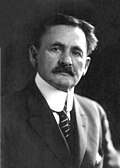
 United States of America
Explanation
Light travels incredibly fast, reaching our eyes almost instantly. Albert Michelson built a special device called the “Michelson interferometer” to study the speed and behavior of light. The device splits light into two paths and then brings them back together to make a stripy pattern called interference fringes. By watching how those stripes move, he could notice even the tiniest difference in the distance light traveled. Using this trick, he measured the speed of light more accurately than anyone before him. His work laid the foundation for the precision found in today’s cameras, smartphones, and GPS systems.
Related Keywords
Michelson interferometer
An instrument that sends light along two perpendicular paths, recombines them, and observes the resulting fringes. Because a change as small as a fraction of a wavelength shifts the fringes, it functions as an ultrahigh-sensitivity length gauge. Its simple layout works with light sources ranging from lamps to lasers. The basic unit appears in gravitational-wave detectors and semiconductor lithography steppers alike. Since Michelson’s time it has remained a central tool of precision metrology.
Interference fringes
A pattern that appears when two or more light waves overlap, alternating between constructive and destructive regions. Fringe positions move with incredibly small changes in wavelength, enabling the measurement of tiny length or refractive-index differences. Detection methods have progressed from photographic plates to CCD sensors, but the underlying physics is unchanged. Modern analysis employs Fourier transforms and phase-shifting algorithms. Michelson’s work was the first major success in turning these fringes into quantitative length standards.
Spectroscopy
The study of how matter emits or absorbs light when separated into its component wavelengths, revealing elemental or molecular identity and state. Because a Michelson interferometer can directly compare wavelengths of spectral lines, it pioneered high-resolution spectroscopy. Its principles live on in modern Fourier-transform infrared (FTIR) systems. In astronomy it diagnoses stellar atmospheres, while in chemistry it tracks reaction dynamics. Accurate wavelength metrology also supplies critical data for laser cooling and atomic-clock research.
Metrology
The discipline and technology that unifies length, mass, time, and other units worldwide, providing the foundation of industry and science. Michelson’s work demonstrated that optical wavelengths could serve as length standards, accelerating the shift from a physical metre bar to the speed-of-light definition. Today the second is defined by an atomic transition and the metre by the product of that second and c, a conceptual lineage that traces back to interferometric measurement. Semiconductor fabrication and aerospace engineering routinely demand sub-nanometre positioning accuracy. Interferometers remain a frontline tool for fulfilling those demands.
Measurement of the speed of light
Determining how many kilometres light travels in one second is one of the most historically challenging measurements of a physical constant. Michelson achieved an uncertainty of only tens of parts per million using a combination of rotating-mirror and interferometric techniques. The constancy of light speed forms a cornerstone of relativity. In 1983 the value 299 792 458 m/s was fixed by definition, and the metre was re-defined using that constant. Precision light-speed experiments continue across optical and microwave domains, probing for hints of new physics.
Gravitational wave detector
Large facilities such as LIGO and Virgo scale the Michelson interferometer up to kilometre arms, aiming to sense mirror-spacing changes of order 10⁻¹⁹ m. A passing gravitational wave lengthens one arm while shortening the other, producing a detectable fringe shift. The first observation in 2015 earned its own Nobel Prize and showcased the ultimate capability of interferometric measurement. Achieving this sensitivity requires laser power stabilization, ultra-high vacuum pipes, and mirrors engineered to suppress thermal noise. The underlying principle is identical to Michelson’s 19th-century setup, illustrating how his invention now opens a new window on the universe.