1908 Nobel Prize in Physics
Reason for Award
for his method of reproducing colours photographically based on the phenomenon of interference (Lippmann colour photography)
Laureates
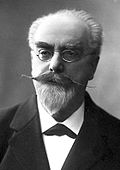
 France
Explanation
Normally, colour photographs keep dyes or inks inside the film to show colours. Gabriel Lippmann imagined a way to copy colours using only the light itself, without any paint. He put a shiny pool of mercury behind the photographic plate so that light would bounce back. The light waves going in and the waves coming out overlapped and made stripy “standing waves.” The stripes are far thinner than a human hair, and their spacing depends on each colour. After developing the plate, the frozen stripes reflect the same colours of the original scene like a tiny rainbow. Pictures made this way are called “Lippmann photographs” and were the first photos with natural colours produced without dyes. The idea later inspired technologies used in TV, computer and smartphone screens.
Related Keywords
interference
Interference is the phenomenon in which two or more light waves overlap and either reinforce or cancel one another. When the peaks of the waves coincide the light becomes brighter, while opposite phases cause darkness. The rainbow colours of soap bubbles or the shine of a CD are produced by wavelength-dependent reflections created by thin-film interference. In a Lippmann plate, the incoming light and the light reflected by mercury interfere inside the emulsion and are fixed as colour-specific fringes. Interference underpins modern technologies such as fibre-optic communication, laser metrology and semiconductor lithography.
standing wave
A standing wave results when a forward-moving wave and a backward-moving wave combine to create fixed nodes and antinodes in space. The unmoving vibration pattern of a plucked guitar string is a familiar example. In Lippmann photography, wavelength-specific standing waves form along the depth of the emulsion, and only the antinodes receive strong exposure. Consequently, silver layers build up every λ/2, forming a three-dimensional grating that later produces Bragg reflection. Standing-wave concepts are equally important in acoustics and RF cavities, where they determine resonance frequencies.
Lippmann plate
A Lippmann plate is a photographic plate able to record and replay standing-wave interference fringes. It consists of an ultra-fine-grain silver-halide emulsion backed by a mercury mirror, leaving a multilayer reflector after development. During playback, simple white light is enough; wavelengths satisfying Bragg’s law are selectively reflected so the image reappears automatically. Although its sensitivity is low, its colour fidelity and light-fastness surpass dye-based methods. Today Lippmann plates find renewed use as media for reflection holograms and high-efficiency wavelength-selective filters.
silver halide emulsion
A silver halide emulsion is a photosensitive material made by dispersing fine crystals of silver chloride or bromide in gelatin. When photons strike the crystal, electrons are released and reduce nearby silver ions to form latent image nuclei. Developer solution acts only on these nuclei, amplifying them into visible metallic silver so exposed areas turn dark. Smaller grains yield higher resolution but lower sensitivity; the Lippmann method needed extremely small grains to record λ/2 fringes. For more than a century silver halide emulsions have been central to photography, cinema and X-ray imaging and remain in specialised uses today.
Bragg reflection
Bragg reflection occurs when planes in a crystal or periodic medium satisfy 2d sinθ = mλ so that a specific wavelength is strongly reflected. Discovered in X-ray crystallography, the same principle governs optical multilayer coatings and photonic crystals. In a Lippmann photograph, alternating layers of silver and gelatin act as Bragg planes, selectively reflecting the wavelength that matches the original colour when illuminated perpendicularly with white light. Thus the viewer sees the original hues, though the colour shifts slightly when the viewing angle changes. Bragg reflection is exploited in high-reflectivity mirrors, pigment-free colour filters and wavelength-selective mirrors in modern optics.
reflection hologram
A reflection hologram is a three-dimensional recording medium in which both illumination and playback light come from the same side, with the image reflected under Bragg conditions. In geometries such as Denisyuk or Lippmann, the reference beam is reflected toward the back of the emulsion during recording, producing depth-wise interference fringes. Ordinary white light can reconstruct the image, yielding high colour purity and strong depth cues via selective reflection. The Lippmann plate is considered the earliest reflection hologram and forms the basis for modern security holograms and AR wavelength combiners. Using its thickness for storage, it achieves high information density and displays high-contrast images even in ambient light.