1909 Nobel Prize in Physics
Reason for Award
for their contributions to the development of wireless telegraphy
Laureates
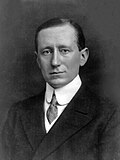
 Kingdom of Italy
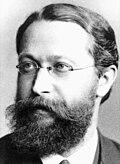
 German Empire
Explanation
Today we can send messages instantly with smartphones, but more than 100 years ago you needed wires for any communication. Mr. Marconi and Mr. Braun found a way to send information through the air using radio waves, like an invisible string. Marconi showed by experiment that waves could cross the ocean, and Braun invented circuits that picked up only the right signals. Thanks to them, ships and trains could contact each other and avoid accidents, making everyday life much safer. Radios and Wi-Fi that we enjoy today all began with this first step.
Related Keywords
wireless telegraphy
Wireless telegraphy is the technique of sending Morse code through radio waves instead of wires. Born at the end of the 19th century, it spread rapidly in maritime and military communication. By exploiting the ground-wave propagation of long wavelengths, signals could travel thousands of kilometers. As more stations shared the spectrum, interference became a problem, prompting the creation of frequency-allocation regulations. Modern Wi-Fi and satellite links are direct descendants of this concept.
spark-gap transmitter
A spark-gap transmitter creates a high-voltage spark between electrodes, injecting sharp current pulses into an LC circuit that radiates radio waves. The circuit’s natural resonance sets the transmission frequency, and the signal is emitted as a damped wave train rather than a continuous carrier. Simple construction made it indispensable for early radio, but its broad bandwidth and high noise were serious drawbacks. It was quickly superseded by vacuum-tube oscillators, yet it remains a useful educational tool for lightning studies and pulse radar principles today.
tuned circuit
A tuned circuit, made of an inductor and capacitor, resonates at a particular frequency. At resonance the impedance becomes extremely high or low, enabling the circuit to filter out unwanted frequencies. Braun placed tuned circuits in both transmitter and receiver, greatly improving selectivity and radiation efficiency. This advance allowed many stations to operate on different frequencies simultaneously, establishing the idea of radio “channels.” Modern RF filters, TV tuners and cell-phone band-pass networks rely on the same principle.
antenna
An antenna is a conducting structure that converts electrical signals into electromagnetic waves and vice versa. Marconi boosted radiation efficiency by using a grounded vertical antenna. The length is typically a quarter- or half-wavelength, affecting both impedance and directivity. Modern designs include patch and fractal antennas, yet they still follow Marconi’s basic principles. Antennas remain one of the most crucial hardware elements for understanding radio-wave propagation.
coherer
A coherer is a glass tube filled with metal filings whose resistance drops sharply when exposed to radio waves. Marconi used this effect to turn Morse code signals into electrical pulses. After each reception the filings had to be loosened by tapping, giving the device a mechanical reset mechanism. Although sensitive, it was prone to noise and was eventually replaced by crystal and vacuum-tube detectors. The coherer remains an iconic device in the history of early radio.
long-distance communication
Long-distance communication is the broad term for sending information across cities, continents and oceans. With wireless telegraphy, contact with ships or colonies could continue even if submarine cables broke. This instantly raised the political and economic value of radio, prompting nations to hold international frequency conferences. Later, ionospheric reflection in the short-wave band enabled even farther links at lower power. Today’s Internet and satellite networks are the culmination of this ongoing evolution in long-distance communication.