1912 Nobel Prize in Physics
Reason for Award
for his invention of automatic regulators for use in conjunction with gas accumulators for illuminating lighthouses and buoys
Laureates
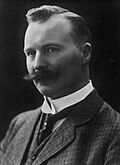
 Sweden
Explanation
More than 100 years ago, lighthouse beams were vital for keeping ships safe at night. If the light kept burning during the day, the gas supply would quickly run out. Nils Gustaf Dalén invented a clever device that stopped the gas when the sun was shining and turned the light on again when it became dark. Thanks to this idea, the gas lasted much longer and lighthouses could shine brightly for distant ships. It was like giving the lighthouse a smart street-lamp switch.
Related Keywords
automatic regulator
An apparatus that keeps gas pressure and flow constant and shuts the supply when required. Dalén’s design used a two-stage diaphragm arrangement that remained stable under sudden pressure changes. It also interfaced with a safety valve to prevent explosive gas release if the flame went out. Because it relied solely on mechanical feedback, it needed no external power, making it ideal for remote lighthouses. The concept strongly influenced later pneumatic control and combustion regulators.
acetylene gas
A hydrocarbon with the formula C2H2 that burns with an intensely bright white flame, once widely used for welding and lighthouse illumination. It is prone to decomposition explosions under high pressure, but can be safely stored when dissolved in acetone and absorbed in a porous medium. Dalén solved this issue using asbestos–acetone filled AGA accumulators. Acetylene remains important for welding today, though LEDs and electric lamps have replaced it in most beacons.
sun valve
A mechanical light sensor that generates a temperature difference along a metal rod according to solar intensity, using differential thermal expansion to open or close a gas valve. It requires no external power and can respond even under weak light from snow or fog. In Dalén’s configuration, the blackened section expands in daylight to shut the gas off, while at night it contracts to reopen the supply. This allowed lighthouses to burn only at night, saving large amounts of gas. The device can be regarded as a precursor to modern photocell-controlled street lighting.
gas accumulator
A vessel for safely storing pressurized gas while smoothing pressure fluctuations and enabling continuous delivery. For acetylene, absorbing the gas in a porous medium is crucial to suppress decomposition. The AGA accumulator used asbestos and acetone, allowing safe transport at working pressures up to 3 MPa. Coupled with the automatic regulator, it provided a steady gas feed to the lighthouse burner. The design principles influenced cylinders for oxygen, hydrogen and other combustible gases.
lighthouse illumination
The technology of providing light signals from coasts and reefs to guide ships safely. In the 19th century whale oil and other oils were common; the early 20th century saw a shift to acetylene gas flames, and later to electric lamps and LEDs. Intensity, flash pattern and colour are specified by international standards so mariners can identify them from afar. Dalén’s automation eliminated the need for keepers to ignite the lamp manually, greatly reducing harsh night work. Even in the GPS era, physical beacons remain an important backup for maritime navigation.