1913 Nobel Prize in Physics
Reason for Award
for his investigations on the properties of matter at low temperatures which led, inter alia, to the production of liquid helium
Laureates
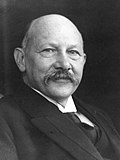
 Netherlands
Explanation
When things become extremely cold, they behave differently. Mr. Onnes was the first person to cool the gas helium down to about −269 °C so that it turned into a liquid. Thanks to this, scientists could study how matter acts in the very cold. One result was the discovery of “superconductivity,” where electricity flows without resistance. Modern machines like MRI scanners work because of what he learned.
Related Keywords
low-temperature physics
Low-temperature physics studies the unusual properties of matter near absolute zero. Electrical resistance, magnetic ordering, and quantum tunneling behave very differently from room temperature. Onnes’s creation of liquid helium laid its foundation. Today the field feeds into quantum computing and astrophysical modeling. Extreme cold serves as an ideal laboratory for probing the limits of physical laws.
liquid helium
When helium is cooled below 4.2 K it becomes a clear, colorless liquid. It has an extremely low boiling point and very high thermal conductivity, ideal for cooling experimental equipment. Onnes first produced it in quantity in 1908. Below 2.17 K it enters a superfluid phase with zero viscosity and other striking behaviors. Liquid helium is still widely used to cool MRI scanners and superconducting magnets.
superfluidity
Superfluidity is the friction-less flow state of liquid helium below 2.17 K. The fluid can run forever through thin capillaries and climb container walls via the “Rollin film.” It is interpreted as a macroscopic quantum phenomenon related to Bose–Einstein condensation. Discovered in 1938 by Kapitza and others, it relied on the availability of liquid helium first generated by Onnes. The concept now extends to ultracold atomic gases and models of neutron-star interiors.
superconductivity
Superconductivity is the complete disappearance of electrical resistance below a critical temperature in certain materials. Onnes first observed it in mercury in 1911. The Meissner effect, expulsion of magnetic fields, is another hallmark and enables magnetic levitation transport and high-performance electromagnets. A full theoretical explanation awaited the 1957 BCS theory. Modern high-temperature superconductors are expected to reduce energy losses in power systems.
cryostat
A cryostat is an apparatus that maintains very low temperatures while allowing measurements on samples. Vacuum insulation and multilayer shields minimize heat flow. Onnes’s Dewar-based setup was the prototype, later refined worldwide. Today liquid-helium and dilution-refrigerator types dominate. They are indispensable for high-energy physics experiments and space-borne infrared telescopes. A stable cold environment guarantees reproducible precision measurements.
critical temperature
The critical temperature is the point at which a phase transition occurs; in superconductivity it is where resistance drops to zero. Onnes measured mercury’s Tc as 4.2 K. Each material has its own value, and researchers aim to raise Tc in alloys and compounds. High-temperature superconductors have pushed it up to liquid-nitrogen levels. Tc is tied to the energy gap of the quantum state and serves as a key benchmark for theory.
helium liquefaction
Helium liquefaction cools compressed helium gas through expansion until it crosses the critical point and becomes liquid. Nations raced to achieve it until Onnes succeeded in 1908. Access to the 4 K regime enabled new physics experiments and contributed to discoveries such as new elements and measurements of the cosmic microwave background. Industrially, it pressurizes rocket fuel tanks and aids optical-fiber production. Improving liquefier efficiency is crucial for reducing cryogenic research costs.
Kelvin scale
The Kelvin scale sets absolute zero as 0 K and uses degree intervals equal to Celsius degrees. Low-temperature physics often deals with the 0–20 K range. Onnes experimentally established the Kelvin scale in this regime using vapor-pressure thermometers. The scale allowed precise comparison of temperature data among researchers. Modern standards such as ITS-90 maintain the same fundamental concept.