1915 Nobel Prize in Physics
Reason for Award
for their services in the analysis of crystal structure by means of X-rays
Laureates
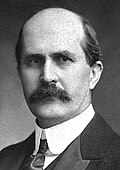
 United Kingdom of Great Britain and Northern Ireland
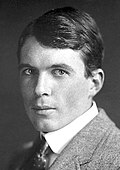
United Kingdom of Great Britain and Northern Ireland
Explanation
Solid things like salt or sugar are made of tiny, neatly arranged pieces called crystals. We cannot see how atoms sit inside those pieces because they are far too small. Father and son Bragg shone a kind of invisible light called X-rays onto crystals and recorded the patterns of the rays that bounced off. By studying those patterns, they could figure out the three-dimensional arrangement of atoms. It is like guessing the shape inside a box by looking at its shadow. Their new, non-destructive method let scientists learn a lot about minerals and medicines. For this great idea, they received the Nobel Prize in Physics.
Related Keywords
X-ray
Electromagnetic waves with wavelengths of 0.01–10 nm. They penetrate matter poorly but match atomic spacings, making them ideal for crystal analysis.
diffraction
The bending of waves when they encounter obstacles or periodic lattices. In crystals, constructive interference creates regular patterns.
Bragg’s Law
The diffraction condition nλ = 2d sin θ. It relates incident wavelength λ and diffraction angle θ to the interplanar spacing d.
structure factor
A complex quantity combining scattering amplitudes of all atoms in a crystal. Diffraction intensity is proportional to |F(hkl)|², encoding atomic arrangement.
X-ray crystallography
The discipline that determines three-dimensional atomic arrangements by analyzing X-ray diffraction patterns. A cornerstone of materials science, biochemistry, and pharmacology.
Debye ring
Concentric diffraction rings observed from polycrystalline samples. Each ring corresponds to a specific d-spacing and can be analyzed with Bragg’s equation.