1919 Nobel Prize in Physics
Reason for Award
for his discovery of the Doppler effect in canal rays and the splitting of spectral lines in electric fields
Laureates
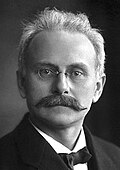
 German Reich
Explanation
Inside glass tubes with electricity flowing, invisible tiny particles (ions) race around at great speed. Mr. Stark discovered that light from ions moving toward us shifts slightly bluer, while light from ions moving away shifts slightly redder—this is the Doppler effect. He also found that when a strong electric force is applied, one color line of light can split into two or three lines. It is like a rainbow made by a prism, but here the splitting is caused by electricity. These discoveries became important clues for understanding the secrets of atoms and light.
Related Keywords
Doppler effect
The Doppler effect is the change in wavelength or frequency of a wave when the source and observer move relative to each other—shorter (bluer) when approaching, longer (redder) when receding. It is the reason an ambulance siren sounds higher as it comes toward you and lower as it drives away. Stark confirmed that light emitted by canal-ray ions exhibits this effect. His result showed that particle velocities can be determined by spectral shifts. The principle is now fundamental in astronomy and Doppler weather radar.
canal rays
Canal rays are beams of positive ions that pass through small holes (canals) in the cathode of a discharge tube. They are the positive-charge counterpart of cathode rays, moving slightly slower because of their greater mass. Stark meticulously studied the spectra emitted by these beams. Canal rays played a crucial role in early mass spectrometry and nuclear physics. Modern ion-beam technologies trace their roots to these experiments.
Stark effect
The Stark effect is the splitting or shifting of atomic or molecular spectral lines under an external electric field. The field lifts the degeneracy of energy levels, producing linear or quadratic splitting patterns. It was first observed by Stark in 1913. Quantum mechanics explains it as an energy shift caused by an external perturbation. The effect underpins laser spectroscopy and electric-field diagnostics.
spectral line
Spectral lines are bright or dark lines at specific wavelengths produced when atoms or molecules emit or absorb light. Their positions and profiles encode information about internal energy levels. In astronomy they reveal elemental composition and stellar temperatures. In physics they provide direct evidence of quantum transitions. The Stark effect offered a new way to probe subtle details of these lines.
positive ion
A positive ion is an atom or molecule that has lost one or more electrons and thus carries a positive charge. Canal rays are streams of such ions. Because ions are far more massive than electrons, they move more slowly at the same energy. Positive ions are key targets in mass spectrometers. They are also crucial in plasma and atmospheric chemistry research.
electric field
An electric field is a region of force produced by electric charges, acting on other charges. It has magnitude and direction, measured in V/m. Strong electric fields influence atomic energy levels and cause the Stark effect. Controlling electric fields is essential in semiconductor devices and particle accelerators. A simple everyday example is a charged balloon attracting small bits of paper.
atomic energy level
Atomic energy levels are the discrete energy states electrons can occupy around a nucleus. Quantum theory predicts their discrete nature, with photons emitted or absorbed during transitions. External electric or magnetic fields split these levels, producing Stark or Zeeman effects. Analyzing level structures is essential for laser development and atomic clock design. Stark’s experiments provided early empirical support for this concept.
spectroscopy
Spectroscopy is the study of how matter emits or absorbs light as a function of wavelength, revealing chemical composition and physical conditions. It began with Newton’s prism experiments and grew rapidly in the 19th century alongside astronomy. Stark’s work stimulated improvements in spectral resolution and measurement accuracy. Modern techniques include laser and ultrafast spectroscopy. Applications now span medicine and environmental monitoring.
dawn of quantum theory
From the late 19th to early 20th century, classical physics failed to explain results from blackbody radiation, photoelectric effect, and spectral analysis. Quantum theory emerged, introducing ideas such as the Bohr model and Planck’s constant. The Stark effect and Doppler measurements provided pivotal evidence for the reality of discrete energy levels. These findings paved the way for Schrödinger’s equation and Heisenberg’s matrix mechanics. Quantum theory now underlies technologies like semiconductors and lasers.
discharge tube
A discharge tube is an apparatus in which a low-pressure gas in a glass tube is ionized by high voltage, producing light and particle beams. It was used to study cathode rays, canal rays, and laid the groundwork for fluorescent lamps. By varying gas composition and voltage, diverse emission spectra can be produced. The device was essential to advances in spectroscopy and electron physics. Discharge tubes are still employed in neon signage and plasma research.