1923 Nobel Prize in Physics
Reason for Award
for his work on the elementary charge of electricity and on the photoelectric effect (e.g., Phys. Mag. XIX:6 (1910) 209; Phys. Rev. 2 (1913) 109-143)
Laureates
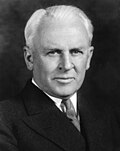
 United States of America
Explanation
When electricity flows, tiny particles called electrons carry the charge, and each electron always has exactly the same amount of charge. Millikan floated tiny drops of oil under a microscope using electric forces and, for the first time, measured this charge precisely; it is called the elementary charge. Knowing this number is the starting point for understanding batteries and wall sockets. He also studied how shining light on metal knocks out electrons—the photoelectric effect—and confirmed that light behaves like little packets of energy. His experiments eventually led to everyday devices such as camera sensors and solar cells.
Related Keywords
elementary charge
The elementary charge is the smallest unit of electric charge carried by a single electron, with a value of about 1.602 × 10⁻¹⁹ C. It was first measured with high precision in Millikan’s oil-drop experiment. Knowing that all observable charges are integral multiples of this constant establishes charge quantization. The constant enables the determination of other physical and chemical constants, such as the Faraday and Avogadro numbers. Modern SI revisions aim to base the ampere on fixed values of the elementary charge, making it even more central to metrology.
photoelectric effect
The photoelectric effect is the emission of electrons from a metal surface when light shines upon it. Higher-frequency light produces electrons with greater kinetic energy, revealing a threshold behaviour. Millikan experimentally established the linear relation between light frequency and electron energy, verifying E = hν − ϕ. This supported Einstein’s light-quantum hypothesis and accelerated the development of quantum mechanics. Modern devices such as solar cells, photomultiplier tubes, and photocathodes exploit the photoelectric effect.
oil-drop experiment
The oil-drop experiment, devised by Millikan, measures the electron’s charge by levitating tiny oil droplets in an electric field. Comparing a droplet’s gravitational fall speed with its rise speed under an applied field allows calculation of its charge. Observing that the charge always appears in integer multiples of a minimal amount revealed the elementary charge. The experiment pushed the limits of early twentieth-century instrumentation, combining microscopy, precision power supplies, and viscosity corrections. It remains a classic laboratory exercise and a historically important example of fundamental-constant measurement.
work function
The work function is the minimum energy required to remove an electron from a metal, usually expressed in electronvolts. In the photoelectric equation E = hν − ϕ, the term ϕ represents the work function. Because it varies with metal type, surface condition, and temperature, it is a key parameter in surface physics and materials science. Millikan measured ϕ for several metals, showing that each produces a distinct intercept in the linear photoelectric graph. Today the work function is critical for designing semiconductor interfaces and optimizing electron-emission sources.
electron
The electron is a fundamental particle carrying negative charge, with a mass of 9.109 × 10⁻³¹ kg. It forms part of atoms and is the primary charge carrier in electrical circuits. Millikan’s work fixed the precise value of the electron’s charge, quantizing the concept of electric quantity. Later studies revealed that electrons are spin-½ fermions and exhibit wave-particle duality, placing them at the heart of quantum mechanics. Modern fields such as quantum computing and spintronics aim to manipulate electron properties with ever-greater precision.
Planck constant
The Planck constant h is a fundamental quantum constant linking energy and frequency. Millikan’s photoelectric measurements greatly improved its numerical value. An accurate h is essential for converting between wavelength and time standards and has influenced redefinitions of the metre and the second. In the 2019 SI revision, h was assigned an exact value, freeing the kilogram from a physical artefact. Together with the quantum Hall and Josephson effects, h forms a cornerstone of the quantum-electromagnetic measurement system.