1925 Nobel Prize in Physics
Reason for Award
for their discovery of the laws governing the impact of an electron upon an atom
Laureates
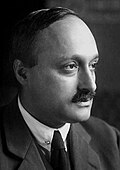
 German Reich
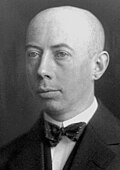
German Reich
Explanation
Everything around us is made of tiny things called atoms, and light electrons move around each atom. Franck and Hertz performed an experiment in which they shot fast electrons into atoms. They found that electrons give energy to atoms only at certain exact speeds, causing the electric current to drop suddenly. This showed that atoms have energy "steps," like steps on a ladder. The discovery is used today in devices that make light, such as fluorescent lamps and TV screens.
Related Keywords
Franck–Hertz experiment
The Franck–Hertz experiment accelerated electrons to collide with atoms, demonstrating the discreteness of atomic energy levels. First reported in 1914 and later refined, it became the basis of the 1925 Nobel Prize. Periodic drops in collector current revealed the 4.9 eV first excitation energy of mercury atoms. Matching this energy with the UV spectral line verified the relation E = hν. The experiment remains a staple of physics education and a cornerstone for numerous light-source technologies.
Quantized energy levels
Inside atoms, electrons can occupy only specific "steps" of energy, not a continuous range. This property is known as the quantization of energy levels. The Franck–Hertz experiment provided the first direct observation supporting this idea. Quantization forms the theoretical backbone of lasers, semiconductors, NMR and many other technologies. It is also essential for astronomical spectroscopy and chemical element identification.
Inelastic collision
An inelastic collision is one in which the kinetic energy of the particles is partially converted into internal energy. In the Franck–Hertz experiment, electrons undergo inelastic collisions when they excite mercury atoms. Each collision removes 4.9 eV from the electron, producing the observed current steps. Measuring inelastic collisions yields excitation cross-sections and state lifetimes of atoms. Such data are crucial for fusion-plasma diagnostics and auroral research in the upper atmosphere.
Mercury atom excitation
Mercury atoms possess a low-lying 4.9 eV excited state that emits ultraviolet radiation at 254 nm, making them ideal for experiments. Franck and Hertz measured how electrons excite mercury atoms in a vapor tube. After excitation, the atoms return to the ground state by emitting 254 nm UV light. This radiative process underlies the operation of fluorescent and germicidal low-pressure mercury lamps. Studies of mercury excitation remain important for plasma displays and advanced light-source development.
Bohr model
The Bohr model, proposed in 1913, depicts electrons orbiting the nucleus in specific allowed paths and emitting light when jumping between them. While successful for hydrogen spectra, it initially lacked direct experimental confirmation. The Franck–Hertz results quantitatively supported the discrete energy differences predicted by the Bohr model. The findings helped evolve the model into modern quantum mechanics, providing a more general framework. The Bohr model is still valuable pedagogically for intuitive understanding of atomic structure.
Vacuum tube
A vacuum tube is an electronic device in which electrons are controlled between electrodes inside a vacuum. In the Franck–Hertz experiment, a triode vacuum tube accelerated electrons and measured current. Optimizing vacuum level and electrode geometry limited collision numbers and yielded accurate data. Vacuum-tube technology later found widespread use in radios, televisions, radar, and early computers. It remains important in high-power transmitters and specialized measurement equipment in modern physics labs.
Fluorescent lamp
A fluorescent lamp is a low-pressure mercury discharge tube coated with phosphor that converts ultraviolet into visible light. Its principle relies on the Franck–Hertz process: electrons excite mercury atoms by 4.9 eV, producing 254 nm UV radiation. The emitted UV is absorbed by the phosphor on the inner wall and re-emitted as visible light of various colors. This highly efficient energy conversion makes fluorescent lamps much more energy-saving than incandescent bulbs. The phosphor technology, now also used in LED lighting, traces its origins to the discoveries underlying the Franck–Hertz experiment.