1936 Nobel Prize in Physics(1)
Reason for Award
for the discovery of cosmic rays (Phys. Z.:13(1912) 1084-1091)
Laureates
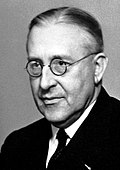
 Austria
Explanation
Invisible particles constantly rain down from the sky; we call them "cosmic rays." Mr. Hess rode in a balloon and measured radiation high above the ground. He found that the radiation came from space, not from Earth itself. It was like discovering that the gentle breeze you feel is linked to distant stars. His finding showed that outer space is connected to our everyday life.
Related Keywords
cosmic rays
Cosmic rays are high-energy radiation composed mainly of charged particles such as protons and helium nuclei. They travel almost at light speed when they reach Earth. Collisions with the atmosphere create secondary particles like pions and muons that can be detected at ground level. Their energy spectrum spans twelve orders of magnitude, from 10^9 eV to beyond 10^20 eV, making the elucidation of their origins and acceleration mechanisms a major challenge in physics and astronomy. Cosmic rays are also studied for practical reasons, such as assessing radiation doses to aircraft crews and astronauts and preventing soft errors in electronic devices.
ionization chamber
An ionization chamber is an instrument that collects ions produced in a gas by radiation and measures the resulting current. Its tiny currents are read by sensitive electrometers attached to internal electrodes. To minimize systematic errors, Hess used sealed chambers and multiple units, compensating for temperature and pressure changes during the balloon ascent. Ionization chambers remain in use for environmental radiation monitoring and medical dosimetry. In cosmic-ray research, they historically served as the fundamental detector for continuously tracking atmospheric ionization changes.
high-altitude balloon observation
High-altitude balloons are rubber or polyethylene balloons that can reach the stratosphere. They can carry scientific payloads weighing hundreds of kilograms, enabling measurements in the thin upper atmosphere. They have been used for experiments on cosmic rays, ultraviolet radiation, and atmospheric chemistry. Because the payload can be recovered, large detectors can be reused and samples returned to laboratories. Modern cosmic-ray missions such as ANITA and Super-TIGER still rely on high-altitude balloons.
secondary particle shower
When a primary cosmic ray collides with an atmospheric nucleus it produces pions that decay into electrons, muons, and photons, forming a cascade. This cascade is called an air shower or secondary particle shower. Spreading over kilometers horizontally and hundreds of meters vertically, it is recorded by many detectors simultaneously to reconstruct the primary particle’s energy and direction. The Pierre Auger Observatory and the Telescope Array are prominent experiments studying such showers. Shower studies also test high-energy interaction models and improve understanding of atmospheric neutrino production.
muon
The muon is a charged lepton with a mass of 105 MeV/c², about 200 times heavier than the electron. It is produced abundantly when cosmic-ray pions decay and is the main secondary particle reaching the ground. Although its mean lifetime is only 2.2 μs, relativistic time dilation lets it survive the journey to Earth’s surface. Muons are used in applications such as muography for imaging volcanoes and tunnels. Analysis of muon flux also aids climate studies and neutrino-oscillation research.