1939 Nobel Prize in Physics
Reason for Award
for the invention and development of the cyclotron and for the results obtained with it, especially with regard to artificial radioactive elements
Laureates
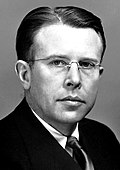
 United States of America
Explanation
A cyclotron is a big machine that uses a strong magnet and electricity to spin tiny “particles” faster and faster. Think of a merry-go-round that keeps speeding up—the particles move in circles and spiral outward as they gain speed. When these fast particles hit a piece of metal, they can create new “glowing stones” called radioactive elements. Doctors use those glowing stones to find and treat diseases. So the cyclotron helps us study atoms and space, and it also helps save people’s lives.
Related Keywords
cyclotron
A device that accelerates charged particles in a circular path. By combining a uniform magnetic field with a radio-frequency electric field, it raises particle energy while keeping the revolution period nearly constant. Widely used in nuclear research and medical isotope production.
particle accelerator
A machine that boosts particles such as electrons or protons to high energies. Designs include linear, cyclotron, and synchrotron accelerators. Essential for high-energy physics, materials analysis, and various applications.
artificial radioactive elements
Radioactive isotopes that are rare in nature but produced artificially through nuclear reactions. Used in medical diagnostics, therapy, and age dating.
Dee electrode
Semi-circular electrodes mounted inside the cyclotron vacuum chamber. Particles are accelerated across the gap and move inside the Dee under magnetic field alone.
magnetic field
A region characterized by magnetic force lines. In a cyclotron it bends particle trajectories into circles; the field strength B sets the orbit radius and revolution period.
accelerating voltage
The radio-frequency potential difference applied across the gap. Each passage gives the particle qV kinetic energy. Higher voltages mean fewer turns to reach a given energy.
radiation therapy
A medical technique that destroys cancer cells by exposing them to radiation. Cyclotron-produced isotopes serve as sources for internal or external beam therapies.
isotope production
The process of creating nuclides of a given element with different mass numbers via nuclear reactions. Hospitals and labs routinely perform it with dedicated cyclotrons.