1947 Nobel Prize in Physics
Reason for Award
for his investigations of the physics of the upper atmosphere, especially for the discovery of the so-called Appleton layer
Laureates
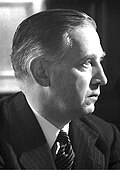
 United Kingdom of Great Britain and Northern Ireland
Explanation
High above the clouds there is a layer of air full of tiny charged particles that can bounce radio waves back to Earth. Sir Edward Appleton sent radio signals upward and measured the time they took to return, learning where this layer sits and how it behaves. We now call it the “Appleton layer,” and it explains why you can sometimes hear distant radio stations at night. Because of his discovery, ships and airplanes could communicate more safely and scientists could start exploring space weather. The knowledge is still important for today’s GPS and satellite links.
Related Keywords
ionosphere
The ionosphere is an atmospheric region roughly 60–1000 km above Earth where solar ultraviolet radiation ionizes molecules, producing free electrons and ions that make the air conductive. Because of this conductivity, the layer bends and reflects radio waves, enabling short-wave communications and radar sounding. Electron density varies with altitude and time, increasing during daytime due to sunlight and decreasing at night through recombination. Several sub-layers exist—D, E, and F2—each with its own critical frequency and radio-wave behavior. Ionospheric conditions are tightly linked to space-weather events and can cause GPS errors or geomagnetically induced currents in power grids.
Appleton layer (F2 layer)
The Appleton layer is the upper part of the ionospheric F region, containing the maximum electron density. Forming at about 250–400 km by day, it reflects short-wave radio most efficiently and thus governs long-distance communication. It rarely disappears completely at night, often providing the only viable sky-wave path after sunset. Electron density and the critical frequency foF2 vary with sunspot number, season, and even latitude, following the solar cycle over the long term. Appleton’s observations and modeling laid the foundation for today’s international ionospheric forecasts and communication planning.
radio wave propagation
Radio wave propagation studies the paths and attenuation of electromagnetic waves through space, including ground waves, tropospheric refraction, and ionospheric sky-waves. Sky-waves reflected by the ionosphere can travel far beyond Earth’s curvature, enabling communication over oceans and mountainous terrain. Appleton’s measurements clarified the relation between reflection height and frequency, showing that waves above the critical frequency escape into space. This led to systematic short-wave frequency selection, antenna elevation design, and mitigation strategies for ionospheric fading. Modern ITU-R recommendations and military communication manuals are still built on this foundation.
critical frequency (plasma frequency)
The critical frequency is the highest frequency that a layer can reflect for vertically incident radio waves, directly tied to the electron density N_e. It is given by fo ≈ 9√N_e (N_e in m⁻³) and serves as a key diagnostic parameter for ionospheric conditions. Appleton measured foF2 from radio echoes and produced the first diurnal plots of its variation. Waves exceeding the critical frequency pass through into space, which is why satellite links normally operate above it. Communication engineers use fo estimates to derive the maximum and lowest usable frequencies (MUF, LUF) for designing reliable short-wave links.
ionosonde
An ionosonde is a ground-based radar that sweeps through radio frequencies, measuring echoes from the ionosphere to create height profiles. It descended from Appleton’s original apparatus and now employs digital processing that enables sounding every few seconds. Outputs include electron-density profiles, foF2, and MUF, all vital for real-time frequency management in aviation and maritime communication. Space-weather alerts use ionosonde networks to forecast HF blackouts during geomagnetic storms. The measurements are also indispensable for satellite orbit determination and GNSS positioning error correction models.
interaction with the magnetosphere
The ionosphere is electrically coupled to Earth’s magnetosphere, producing auroral phenomena and ionospheric disturbances during magnetic storms. Successors to Appleton’s work observed that E×B drifts and Lorentz forces near the magnetic equator reshape the F2 layer. Energy input from the magnetosphere intensifies ionospheric currents and rapidly alters electron density at high latitudes. These changes can disrupt HF communications and increase scatter echoes in the VHF band. Combining ground magnetometers with ionosondes has advanced quantitative understanding of ionosphere–magnetosphere coupling.
magneto-ionic theory
Magneto-ionic theory, developed by Appleton and Hartree, describes the ionospheric refractive index by incorporating both electron density and Earth’s magnetic field. The theory predicts two polarized propagation modes—O (ordinary) and X (extraordinary)—and their separation has been confirmed in observations. The equations include the gyro-frequency and plasma frequency, enabling calculation of critical and split frequencies. This understanding improved the design of polarization-selective antennas and direction-finding equipment. Modern ionospheric ray-tracing software and ITU-R propagation models still rely on these core equations.
solar activity cycle
The solar activity cycle, averaging 11 years, features variations in sunspot numbers and ultraviolet output that significantly alter ionospheric electron density. The Appleton layer’s foF2 exhibits corresponding long-term oscillations, rising during solar maxima and falling in minima. When activity is low, the critical frequency drops and short-wave links become less stable. Real-time data from agencies such as NOAA’s Space Weather Center inform international communication operators. Thanks to Appleton’s early long-term monitoring, the link between the ionosphere and solar activity was recognized sooner than it otherwise would have been.