1950 Nobel Prize in Physics
Reason for Award
for his development of the photographic method of studying nuclear processes and his discoveries regarding mesons made with this method
Laureates
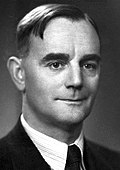
 United Kingdom of Great Britain and Northern Ireland
Explanation
A camera film keeps a picture when light hits it. Mr. Powell made a very thick and sensitive film so that even tiny invisible particles could leave tracks on it. Under a microscope those tracks look like sled marks in fresh snow. Using this trick he discovered new particles called “mesons” and studied what happens inside atoms. Thanks to his work we gained another clue to understand the universe and nuclear energy.
Related Keywords
nuclear emulsion
A nuclear emulsion is a solid detector consisting of photographic emulsion layers hundreds of micrometres thick, densely packed with silver-halide crystals. When a charged particle passes through, ionisation electrons form latent images that are reduced to silver grains during development, fixing the track. Under an optical microscope the track can be resolved with micrometre to sub-micrometre precision. Particle momentum can be estimated from range–energy relations, Bragg peaks, or multiple-scattering angle distributions. The technology is still employed today for locating neutrino vertices and searching for dark-matter interactions.
meson
Mesons are bosons composed of a quark–antiquark pair and play a key role in mediating the strong nuclear force. In Powell’s era the π and K mesons were the first to be observed, providing crucial clues about the range and nature of nucleon–nucleon interactions. Their masses lie between that of the electron and the nucleon, hence the name “meson” (middle particle). Typical lifetimes are 10⁻⁸–10⁻¹⁰ s, and their decays often produce muons and neutrinos. Within the Standard Model more than eight light mesons exist, forming the foundation of hadron physics.
cosmic ray
Cosmic rays are high-energy nuclei, electrons and γ-rays originating from the Galaxy or the Sun. When they collide with Earth’s atmosphere they create cascades of secondary particles called air showers, detectable at ground level or in the stratosphere. In the early 20th century, when man-made accelerators were limited, cosmic rays were the main source of high-energy particles for research. Powell carried nuclear emulsions to mountain tops and balloons to capture secondary cosmic-ray particles and discover new species. Today cosmic-ray studies remain indispensable for high-energy astrophysics and climate science.
photographic method
The photographic method refers to experimental techniques that use photosensitive materials to permanently record charged-particle tracks. Besides silver-halide emulsions, later implementations employed X-ray films and holographic plates. Because the record is static, complex events can be analysed in great detail without time constraints. On the downside, data extraction originally relied on manual microscopic scanning, requiring enormous labour to accumulate large statistics. The development of automatic measuring machines tackled this limitation and pioneered high-speed, high-density data analysis.
pion
The pion (π) is the lightest meson and exists in three charge states: π⁺, π⁰ and π⁻. With a mass of about 140 MeV/c² it is regarded as the mediator of the short-range part of the nuclear force. Charged pions have a mean lifetime of 2.6×10⁻⁸ s and decay into a muon and a neutrino, while the neutral pion lives 10⁻¹⁷ s and decays into two γ-rays. Powell’s observations distinguished π from μ, providing decisive tests of nuclear-force models. In modern accelerator facilities pion beams serve as neutrino sources and tools for hadron-interaction studies.
muon
The muon (μ) is a lepton with a mass about 200 times that of the electron and a lifetime of 2.2×10⁻⁶ s. As a dominant component of cosmic-ray air showers it can be detected at ground level and penetrates matter more readily than X-rays. Powell demonstrated that the muon is a lepton rather than a meson, helping clarify particle classification. Today muons are utilised in g−2 precision tests, muon-catalysed fusion, and muography to image volcano interiors. In the Standard Model it is the second-generation charged lepton alongside the electron and tau.
track analysis
Track analysis is the method of measuring the traces left by particles in a detector to extract physical quantities. In nuclear emulsions coordinates are recorded with micrometre precision, and length, curvature and angular distributions are statistically processed to estimate momentum and charge. Algorithms such as multiple-scattering fitting and range–energy correlation are used in combination. Powell embedded metal grids between plates to achieve inter-layer alignment and true three-dimensional reconstruction. The core ideas of data correction and error propagation established here persist in modern silicon-pixel detectors.
nuclear decay
Nuclear decay is the process by which an unstable nucleus transforms into a more stable one, exhibiting modes such as alpha decay, beta decay, and fission. Each decay occurs with a characteristic lifetime, and the emitted particles and energies serve as fingerprints of the nuclide. Powell’s photographic method captured both the origin and endpoint of a track, allowing direct tests of mass and momentum conservation across a decay. This demonstrated that probabilistic laws governing nuclear decay also apply to elementary-particle decays. Today the principles underpin medical isotope diagnostics, radiometric dating, and nuclear-energy management.