1962 Nobel Prize in Physics
Reason for Award
for his pioneering theories for condensed matter, especially liquid helium
Laureates
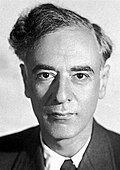
 Soviet Union
Explanation
When helium is cooled to extremely low temperatures, it flows without any friction and shows a “superfluid” state that looks like magic. Lev Landau invented a way to describe this strange flow with mathematics. He explained the liquid by thinking of it as “two parts.” One part behaves like an ordinary liquid, and the other part flows with absolutely no resistance. With this idea he could explain why helium climbs walls or keeps swirling forever in a container. His work helps future cooling technology and even space research.
Related Keywords
superfluidity
Superfluidity is a quantum phenomenon in which a liquid loses all viscosity and glides along walls without friction. It appears only at very low temperatures, allowing a fluid to flow forever in a closed loop. In helium-4 it emerges below about 2.17 K, while in helium-3 it requires still lower temperatures. The circulation of flow is quantized, so in a ring the current is locked to integer values. As a macroscopic display of quantum mechanics, superfluidity strongly influences condensed-matter physics and precision-measurement technologies.
two-fluid model
The two-fluid model, proposed by Landau, treats a superfluid as a mixture of a normal component and a superfluid component. The normal part carries viscosity and entropy, while the superfluid part has zero viscosity and zero entropy. Their relative fractions vary with temperature, with the superfluid density peaking at absolute zero. The model successfully predicts second-sound propagation and the critical velocity, matching experiments. It has become an indispensable foundation of low-temperature physics.
Fermi-liquid theory
Fermi-liquid theory, developed by Landau, describes an interacting Fermi system in terms of quasiparticles that behave like weakly interacting free particles. Quasiparticles possess finite lifetimes and effective masses, becoming long-lived at low temperatures. The theory accurately explains specific heat, magnetic susceptibility of metals, and the properties of 3He. Its parameters F_l^s,a encapsulate interaction information and relate directly to scattering amplitudes. Fermi-liquid theory remains a basic starting point for heavy-electron systems and quantum-Hall liquids.
quantum fluid
A quantum fluid is a fluid whose particles’ wave nature extends to macroscopic scales, producing collective quantum behavior. Superfluid helium and ultracold Bose–Einstein condensed atomic gases are prime examples. In such fluids vortices are quantized and macroscopic coherence is established. Research on quantum fluids covers quantum turbulence, critical phenomena, and phase transitions in low-dimensional systems. Technologically, they promise applications in high-precision inertial sensors and as coolants for quantum-information devices.
helium II
Helium II is the name for 4He in its superfluid phase below the λ-point at about 2.17 K. It has zero viscosity and shows pronounced fountain and capillary effects, flowing through tiny channels without resistance. The specific heat exhibits a divergent peak near the λ-point, making it a textbook example of a second-order phase transition. Helium II displays rich phenomena such as second sound and quantized vortices and is widely used as a working fluid in low-temperature experiments. Its properties are explained in detail by Landau’s theory and remain a central research topic today.