1967 Nobel Prize in Physics
Reason for Award
for his contributions to the theory of nuclear reactions, especially his discoveries concerning the energy production in stars
Laureates
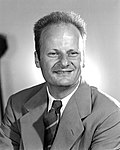
 United States of America
Explanation
The Sun and the stars look like blazing balls of fire in the sky. Their brightness comes from tiny particles fusing together in a process called “nuclear reactions.” Hans Bethe was the first to clearly explain how these reactions create the light and heat inside stars. He calculated that, deep in a star’s core, hydrogen nuclei stick together to become helium, releasing huge amounts of energy. Thanks to his work, we know why the Sun can keep shining for billions of years. The sunlight we enjoy every day is a mystery of the universe solved by Bethe’s theory.
Related Keywords
pp chain
The proton-proton (pp) chain is the dominant hydrogen-fusion sequence in solar-type stars. It begins when two protons quantum-tunnel through their Coulomb barrier to form deuterium, followed by a proton capture producing 3He. Two 3He nuclei then collide to yield 4He plus two protons, so four original protons become one helium nucleus. The cycle releases 26.7 MeV of energy, which supports the luminosity of the star. Bethe calculated the cross sections of each step and produced the first reliable reaction rates for solar conditions.
CNO cycle
The CNO cycle uses carbon, nitrogen, and oxygen nuclei as catalysts to fuse hydrogen into helium in more massive main-sequence stars. Protons sequentially capture onto 12C, creating 13N, 14O, 15O, which β+-decay and eventually return to 12C, forming a closed loop. The overall result is again four protons becoming one helium nucleus with an equivalent energy release. Because the reaction rate scales approximately with the 20th power of temperature, stellar luminosity rises steeply with central temperature. Bethe showed that this extreme sensitivity explains the mass–luminosity relation and potential instabilities in high-mass stars.
quantum tunneling
Quantum tunneling is the phenomenon in which a particle penetrates a potential barrier it classically could not overcome. Inside stars, protons repel each other via Coulomb forces, yet tunneling allows them to come close enough to fuse. Bethe employed the Gamow factor to calculate this penetration probability, explaining how fusion proceeds at core temperatures of only tens of millions of kelvin. The concept is central not only to nuclear physics but also to technologies such as tunnel diodes and scanning tunneling microscopes. Without tunneling, the Sun could not sustain its current brightness and life on Earth would not exist.
solar neutrino
Solar neutrinos are electron neutrinos produced in the fusion reactions at the Sun’s core. They leave the star almost at light speed and pass through rock and water with minimal interaction before reaching Earth. Observations in the 1960s detected only about one-third of the predicted flux, creating the “solar neutrino problem.” This discrepancy eventually provided crucial evidence for neutrino oscillations, recognized by the 2002 Nobel Prize. Bethe’s reaction rates supplied the theoretical baseline that made the problem—and its revolutionary solution—possible.
nuclear astrophysics
Nuclear astrophysics is an interdisciplinary field linking nuclear reactions to astrophysical phenomena. Its main goals include explaining stellar energy generation, element synthesis, and explosive events using nuclear physics data. Bethe’s fusion theory in stars laid the groundwork, expanding the field from stellar interiors to supernovae and the early universe. Today, underground accelerators, gamma-ray telescopes, and neutrino detectors collaborate to supply complementary data. The field’s appeal lies in the triad of theory, observation, and experiment working together to trace the chemical evolution of the cosmos.