1969 Nobel Prize in Physics
Reason for Award
for his contributions and discoveries concerning the classification of elementary particles and their interactions (Phys. Rev. 92 (1953) 833-834, Phys. Rev. 125 (1962) 1067-1084, Phys. Lett. 8 (1964) 214-215)
Laureates
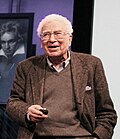
 United States of America
Explanation
All around us there are particles so tiny we cannot see them. Murray Gell-Mann grouped these particles the way a picture book groups animals. He also suggested each particle is made of even smaller “quarks.” Think of it like building animals out of LEGO bricks: different bricks make different animals, and different quarks make different particles. Because of Gell-Mann’s new sorting method, scientists could clearly understand which particles belong together. It also helped explain how the particles pull or push on one another, bringing us closer to knowing how the universe works.
Related Keywords
Eightfold Way
Proposed by Gell-Mann in 1961, the Eightfold Way arranges hadrons into eight groups when plotted against charge and strangeness, matching the octet representation of flavour SU(3) symmetry. Small symmetry breaking explains mass differences and predicted the then-unknown Ω⁻ baryon. The scheme became a common language among particle physicists, guiding data organisation and new-particle searches.
quark model
A theory in which hadrons are built from more fundamental quarks. The early model assumed three flavours (u,d,s); baryons are three-quark states and mesons are quark–antiquark pairs. It successfully predicted multiplet sizes and magnetic moments, and it was extended after deep-inelastic scattering and the discovery of charm and bottom flavours. Introduction of colour quantum numbers reconciled the model with the Pauli principle and led to quantum chromodynamics.
SU(3) symmetry
The special unitary group SU(3) consists of 3×3 unitary matrices with determinant 1 and forms the mathematical backbone of the Eightfold Way. Its eight generators define directions in group space, mapped to conserved quantities of particles. If the symmetry were exact all particles would be degenerate; treating symmetry breaking perturbatively explains mass splittings. Group theory techniques were later applied to electroweak SU(2)×U(1) in the Standard Model, making symmetry a powerful tool for understanding particles.
strangeness
A quantum number conserved by the strong interaction but changed by the weak interaction. Long-lived particles discovered in cosmic-ray experiments seemed “strange,” giving the name. Gell-Mann used strangeness as one axis of the Eightfold Way, clarifying selection rules for particle production and decay. In the quark model it arises naturally from the s quark. Introducing this quantum number guided searches for unknown particles and remains a foundation for studying flavour physics in the Standard Model.
quantum chromodynamics
QCD is an SU(3)_c gauge theory describing quarks and gluons and underlies the strong interaction. By adding an internal “colour” degree of freedom to Gell-Mann’s quarks, gluons carry colour charge and explain both confinement and asymptotic freedom. The theory matches numerous experimental observations such as scaling violations and jet production in high-energy scattering. Lattice-QCD computations reproduce hadron masses and transition temperatures, playing a crucial role in studying the early-universe quark-gluon plasma.
Omega minus baryon
A baryon composed of three strange quarks (sss) with electric charge −1. Its existence and mass were predicted by the Eightfold Way and confirmed in 1964 at Brookhaven National Laboratory. The discovery dramatically boosted confidence in the theory and was decisive in accepting the quark model. Ω⁻ remains important in hypernuclear physics and studies of strange matter.