1971 Nobel Prize in Physics
Reason for Award
for his invention and development of the holographic method (Nature 161 (1948) 777–779, Proc. Roy. Soc. A 197 (1949) 454, Proc. Phys. Soc. B 64 (1951) 449)
Laureates
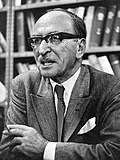
 United Kingdom of Great Britain and Northern Ireland
Explanation
A normal photograph is flat, but a hologram shows a 3-D image that changes when you move your head. It looks like a little model floating inside a shiny sticker. Dr. Gabor found a way to overlap laser light so that not only the brightness but also the tiny wiggles of light are recorded on film. When the same laser shines on that film, a lifelike image pops up in mid-air. The shiny pictures on theme-park posters or banknotes use this idea.
Related Keywords
holography
A technique that records both amplitude and phase of light by exploiting interference and diffraction, then reconstructs the original wavefront when illuminated with the reference beam. Unlike ordinary photography, it preserves depth cues and allows focusing after recording, making it ideal for 3-D imaging and precision metrology. Applications extend beyond visible light to X-rays and electron waves, enabling nanoscale studies in materials science and biology. Computer-generated holography now underpins AR/VR displays by merging CG with real light fields. Quantum information researchers also view holography as a tool for manipulating entangled-photon phase fronts.
laser
A light source emitting waves of a single color and direction with long coherence length. In holography it is indispensable for stable interference between object and reference waves; its invention in 1960 greatly improved hologram resolution and fidelity. By tuning wavelength, holography can now be performed in infrared, ultraviolet, and terahertz bands, enabling multi-wavelength interferometry and thermal-field visualization. High-power lasers support holographic micromachining and fabrication of optics for inertial confinement fusion. Combining femtosecond lasers with high-speed cameras opened the path to dynamic holography.
interference
A phenomenon where overlapping waves add, giving bright fringes where peaks meet peaks and dark fringes where peaks meet troughs. A hologram records the interference pattern between object and reference waves, and the fringe contrast encodes phase differences. Because fringe spacing is on the order of the wavelength, the recording medium’s resolution critically affects performance. The same principle is used in micro-interferometers and fiber sensors, measuring temperature or strain with picometer precision. In quantum mechanics, interference of probability amplitudes underlies quantum holography.
diffraction
The bending of waves around small apertures or obstacles. Hologram reconstruction uses the recorded fringes as a diffraction grating, generating +1, 0, and −1 order beams at specific angles. Fourier diffraction theory shows how the complex transmittance of the hologram rebuilds the object image in the far field. X-ray diffraction is vital for crystal-structure analysis; electron diffraction serves semiconductor defect inspection. Super-resolution techniques that surpass the diffraction limit are being advanced by combining them with holographic light control.
phase information
Light waves are fully described by their phase, which marks the position of peaks and troughs, yet ordinary photography or the human eye captures only brightness. Holography visualizes and stores phase via interference, so depth is regained upon reconstruction. Phase metrology is essential for lens-aberration correction, transparent-sample observation, and refractive-index mapping of biological tissue. Similar phase-contrast methods with electrons or neutrons allow imaging of internal electromagnetic fields in materials. In quantum computing, phase is the information carrier, making precise phase-control technologies directly relevant to future quantum optics.
coherent light
Light whose phase is uniform over time and space. Stable interference fringes require this condition, ideally provided by single-frequency, single-mode lasers. Before lasers, Gabor obtained pseudo-coherent light from mercury lamps using spatial filters. Today, optical frequency combs act as ultra-coherent sources for absolute distance measurement and time synchronization. Direct modulation of semiconductor lasers now enables high-frame-rate dynamic hologram projection.
recording medium
The material that fixes a hologram. Options include silver-halide plates, optical glass, photopolymers, and phase-change memories. Resolution, sensitivity, and scattering loss of the medium determine 3-D image quality, with sub-micron grain size desirable. Using photoresist, holographic and lithographic methods merge to mass-produce micro-optical components. Modern multi-layer Blu-ray technology borrows concepts from holographic multiplex recording.
reconstruction wave
The reference beam used to illuminate the hologram and bring back the original light wave. If its angle or wavelength differs from that used during recording, the image distorts or shows color fringing, so high stability is essential. By modulating the reconstruction wave, magnified holograms or virtual images can be produced, leading to HUDs and 3-D displays. Employing ultrashort-pulse reconstruction allows time-resolved holography to visualize processes on picosecond scales. X-ray reconstruction with free-electron lasers is expected to enable dynamic observation of atomic arrangements.
three-dimensional imaging
A collective name for technologies that record and display an object’s depth and shape. Holography is regarded as the only full 3-D method that provides parallax without glasses. In medicine, holographic CT reconstructions assist surgical navigation; in cultural-heritage preservation, 3-D data can be archived without touching delicate artifacts. 3-D sensing is indispensable for automotive LiDAR and face recognition, where holographic methods contribute to high resolution and speed. Future telepresence and holographic teleportation rely on real-time 3-D imaging advances.
digital holography
A modern approach that captures interference fringes with CCD/CMOS sensors and reconstructs the wavefront numerically. After capture, depth of focus and viewing angle can be changed freely, so one frame holds multi-view information. GPU parallel processing and fast Fourier transforms enable real-time 3-D video streaming and live biological microscopy. Machine-learning-based noise-reduction and super-resolution algorithms improve particle tracking and fluid measurements. In optical communications, spatial multiplexing using digital holograms is being studied to greatly expand channel capacity.