1976 Nobel Prize in Physics
Reason for Award
for their pioneering work leading to the discovery of a new, heavy elementary particle, the J/ψ meson (Phys. Rev. Lett. 33 (1974) 1404-1406, 1406-1408, 1408-1410 and related papers; early hint in Phys. Rev. Lett. 25 (1970) 1523-1526).
Laureates
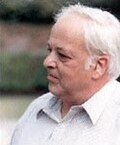
 United States of America
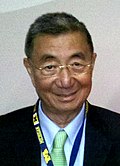
United States of America
Explanation
Everything around us is made of incredibly tiny bits. In 1974, Mr. Richter and Mr. Ting used huge machines to smash electrons and positrons together and spotted a brand-new, very heavy particle. They called the particle J/ψ (pronounced “Jay-sigh”); nothing like it had ever been seen before. It was like adding a new shape of LEGO brick to the set scientists use to build matter. Although the particle breaks apart almost instantly, special detectors can record the traces left by its fragments. The discovery showed that there are more kinds of “quarks,” the even smaller pieces inside, giving us extra clues about how nature works.
Related Keywords
J/psi particle
The J/ψ particle is the ground-state charmonium meson consisting of a charm quark and an anti-charm quark, with a mass of about 3.097 GeV/c² and an exceptionally narrow width of ~100 keV. Its observation provided decisive evidence for the charm quark and triggered the 1974 ‘November Revolution’ in particle physics.
charm quark
The fourth quark flavor to be added after up, down and strange; it carries a +2/3e charge and has a mass of roughly 1.3–1.7 GeV/c². Charm is essential for the GIM suppression of flavor-changing neutral currents and for maintaining the symmetry structure of the CKM matrix.
quark model
A framework proposed in the 1960s that classifies hadrons as bound states of quarks. The discovery of the J/ψ extended the model from three to four flavors and cemented the foundations of the Standard Model.
electron-positron collision experiments
A technique in which electrons and positrons are collided head-on, providing a clean initial state that is ideal for producing new particles. Accelerators such as SPEAR and LEP employ this method to achieve high-resolution spectral measurements.
synchrotron
A circular accelerator in which charged particles are guided by electromagnets and accelerated in stages. Notable examples include the Brookhaven AGS and CERN PS, capable of delivering a variety of particle beams.
Standard Model
The theoretical framework that unifies the electromagnetic, weak and strong interactions. With the addition of the charm quark the flavor sector became self-consistent, greatly increasing the model’s explanatory power.
particle detectors
Devices that record the ionization, light or other signals left by charged particles or photons to reconstruct their energy, momentum and trajectories. High-resolution Čerenkov counters and electromagnetic calorimeters were crucial in the hunt for the J/ψ.
mass spectrum
A plot showing the frequency distribution of invariant masses of produced particles; a new particle appears as a sharp peak. In the experiments of Ting and Richter a peak at 3.1 GeV/c² signaled the presence of the J/ψ.