1978 Nobel Prize in Physics(1)
Reason for Award
for his basic inventions and discoveries in the area of low-temperature physics
Laureates
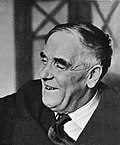
 Soviet Union
Explanation
When things become extremely cold, their behavior can change completely. Mr. Kapitsa cooled the gas helium down to –269 °C so that it became a liquid and then looked for unusual effects. He found that the liquid could climb the walls of its container and flow without friction. This strange state is called “superfluidity.” Thanks to this discovery we learned that matter can act in ways very different from ordinary ice or water.
Related Keywords
superfluidity
A quantum state of a liquid in which viscosity effectively vanishes, allowing flow through capillaries or over container walls without resistance. Vorticity is quantized and above a critical velocity the system enters quantum turbulence. Kapitsa first observed it in Helium II in 1937.
liquid helium
A colorless liquid formed when gaseous helium is cooled below 4 K. In 4He it undergoes a superfluid transition at 2.17 K; in 3He a pairing condensate appears in the millikelvin range. It is the primary cryogen for MRI scanners and particle detectors.
Kapitza resistance
Thermal boundary resistance that appears at a metal–liquid-helium interface. It grows roughly as T⁻³ at low temperatures and can limit cryogenic heat removal. Explained by acoustic-mismatch models.
dilution refrigerator
A refrigerator that exploits phase separation in a 3He-4He mixture to reach temperatures below 10 mK. It builds on Kapitsa’s circulation and heat-exchange concepts and cools qubits and bolometers.
high-field cryogenics
Techniques that combine strong fields from Bitter magnets with liquid-helium cooling. They enable precision studies of superconducting transitions and the quantum Hall effect.