1979 Nobel Prize in Physics
Reason for Award
for their contributions to the theory of the unified weak and electromagnetic interaction between elementary particles, in particular the prediction of the weak neutral current
Laureates

 United States of America
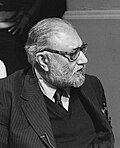
 Pakistan
United States of America
Explanation
Our world is made of tiny particles that interact through different “forces.” Long ago, scientists thought that electricity-related force and the force behind some kinds of radioactivity were separate. Drs. Glashow, Salam and Weinberg created an idea showing these two forces are really two faces of one family. Their theory ties together why magnets attract and how particles change inside the Sun. It also predicted a new phenomenon called the “weak neutral current,” which experiments later found to be real. Their work teaches us that nature follows simple, connected rules.
Related Keywords
electroweak interaction
The concept that treats electromagnetic and weak interactions within a single theoretical framework. At high energies the two forces attain equal strength, revealing the SU(2)×U(1) gauge symmetry. It explains phenomena from stellar interiors to accelerator data. W bosons, Z bosons and photons are described collectively, enabling precise calculations of scattering cross sections and decay rates. As a pillar of the Standard Model, it laid the groundwork for studies such as neutrino oscillations and the Higgs mechanism.
weak interaction
A short-range force responsible for beta decay and related processes. It has charged and neutral current components and involves neutrinos. Because its carriers, the W± and Z^0 bosons, are massive, the force acts over extremely small distances. It violates parity by coupling predominantly to left-handed particles. The weak interaction governs flavor changes among quarks and nuclear fusion reactions inside the Sun, influencing cosmic element formation.
electromagnetic interaction
The force between electrically charged particles, classically manifesting as Coulomb and magnetic forces. In quantum terms it is mediated by the massless photon and has infinite range. It governs phenomena from chemical bonding and electric circuits to the propagation of light across the cosmos. In electroweak theory it is treated on equal footing with the weak interaction; the photon remains massless after symmetry breaking, making it a special gauge boson.
gauge symmetry
The property that physical laws remain invariant under local phase transformations. Electromagnetism uses a U(1) symmetry, while electroweak theory employs SU(2)×U(1). To preserve symmetry, vector fields are introduced, which become the force-carrying particles. The gauge principle tightly restricts the form of interactions, enhancing a theory’s predictive power. It extends to quantum chromodynamics and grand-unification models, serving as the blueprint of modern particle physics.
weak neutral current
A type of weak interaction that leaves electric charge unchanged and is mediated by the Z^0 boson. It was a theoretical prediction and was first observed in 1973 at CERN’s Gargamelle experiment. It appears in neutrino–electron scattering and deep inelastic processes, exhibiting parity violation. The discovery provided a decisive test of electroweak unification and paved the way for W and Z searches. Today weak neutral currents are key signals in neutrino detectors and dark-matter experiments.
W and Z bosons
Massive gauge bosons mediating the electroweak interaction, with masses about 80 GeV (W) and 91 GeV (Z). The W± carry electric charge, whereas the Z^0 is neutral. They were discovered in 1983 at CERN’s SPS collider, confirming the Standard Model. Precise measurements of their widths and couplings constrain the Higgs mass and possible new physics. They also play roles in early-universe baryogenesis and energy transport in supernovae.
spontaneous symmetry breaking
A phenomenon in which the underlying equations are symmetric but the vacuum state is not. When the Higgs field acquires a vacuum expectation value, the SU(2)×U(1) symmetry contracts to U(1) electromagnetic, giving mass to the gauge bosons. It explains why force carriers can be massive. The concept is universal, appearing in familiar systems such as ferromagnetism.
Higgs mechanism
The theoretical mechanism that endows gauge bosons and fermions with mass via spontaneous symmetry breaking. After symmetry breaking a single physical entity, the Higgs boson, remains. Its discovery at the LHC in 2012 confirmed the final missing piece of electroweak theory. The Higgs mechanism explains the origin of particle masses and serves as a key testing ground for new physics scenarios.
SU(2)×U(1) gauge group
The mathematical foundation of electroweak theory. SU(2) represents weak isospin, U(1) hypercharge. The symmetry has four generators, each associated with a gauge field that mediates the force. After symmetry breaking the fields combine into the photon, W and Z bosons. The choice of gauge group rigidly fixes particle charges and coupling strengths.
weak mixing angle
A parameter, denoted sin^2θ_W, that determines the mixing between the Z^0 boson and the photon. It sets the ratio of electric charge to weak isospin, predicting the W/Z mass ratio and various couplings. The angle is measured with high precision in accelerator experiments and serves as a stringent consistency check of the Standard Model. Its energy-dependent running offers key clues for grand-unification theories.