1989 Nobel Prize in Physics(1)
Reason for Award
for the invention of the separated oscillatory fields method and its application to the hydrogen maser and other atomic clocks (Phys. Rev. 76 (1949) 996; 78 (1950) 695–703; 126 (1962) 603–615, etc.)
Laureates
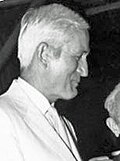
 United States of America
Explanation
Your watch or smartphone shows very accurate time thanks to “atomic clocks.” Dr. Ramsey invented a way to split the tiny rhythm of an atom into two parts and compare them. This produces a much clearer signal, letting clocks keep extraordinarily precise time. Because of his idea, GPS, television broadcasts, and even the Internet can stay perfectly synchronized. In short, Dr. Ramsey’s work keeps our daily lives running on time.
Related Keywords
separated oscillatory fields method
A technique in which two short electromagnetic pulses are spatially separated and applied to atoms or molecules; the resulting interference fringes allow extremely high-resolution determination of transition frequencies. Proposed by Ramsey in 1949, it revolutionized magnetic-resonance and spectroscopy. Because the linewidth scales with the pulse separation rather than pulse duration, it can be made very narrow. It remains a standard tool in atomic clocks, precision measurements, and qubit characterization.
hydrogen maser
A microwave oscillator using the 1.42 GHz hyperfine transition of hydrogen. Self-sustained stimulated emission in a high-Q cavity yields excellent short-term stability (~10^{-15}). Ramsey’s method sets the initial frequency. Hydrogen masers serve as frequency references in Earth stations and VLBI, thanks to low drift, making them indispensable in deep-space navigation and fundamental constant tests.
atomic clock
A time-keeping device that uses an atomic transition frequency as its reference. Implementations include Cs-beam, optical-lattice, and trapped-ion clocks. Ramsey fringes narrow the linewidth, enabling the SI second to be fixed at 9 192 631 770 Hz. Atomic clocks underlie GPS, Internet time synchronization, and timestamping in finance.
Ramsey resonance
The interference-fringe pattern observed in the separated oscillatory fields method. A sharp central peak is flanked by periodic side-lobes. The fringe spacing equals the inverse of the free-evolution time T, giving high sensitivity to phase noise. Ramsey resonances are exploited to measure qubit coherence times and to enhance magnetic-sensor sensitivity.
redefinition of the second
In 1967 the General Conference on Weights and Measures redefined the SI second using the hyperfine transition of Cs-133. Ramsey’s method was crucial to achieving the required accuracy. Timekeeping thus shifted from astronomical observations to quantum transitions, advancing the unification of the physical-constants system.