1994 Nobel Prize in Physics(1)
Reason for Award
for pioneering contributions to the development of neutron scattering techniques for studies of condensed matter (development of neutron spectroscopy) Phys. Rev. 111(1958) 747-754; Rev. Mod. Phys. 30(1958) 236-249 (erratum 30(1958) 1177); Phys. Rev. Lett. 2(1959) 256-258; Phys. Rev. 119(1960) 980-999
Laureates
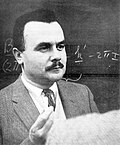
 Canada
Explanation
Things like iron or plastic we use every day are made of many tiny atoms. By shooting a small electric-neutral particle called a neutron, we can find out how these atoms are arranged. Mr. Brockhouse invented a way to give neutrons different energies and measure very precisely how they bounce back. It is like throwing balls and guessing what is inside by the way they rebound. Thanks to this technique we can safely study new magnets, battery materials and many other things.
Related Keywords
neutron
A neutron has nearly the same mass as a proton but carries no electric charge. Inside the atomic nucleus it is bound to protons by the strong nuclear force. Because it is uncharged, it can penetrate several centimetres of metal, giving it high transparency. When it is scattered it interacts strongly with atomic nuclei and with magnetic moments, providing both structural and magnetic information. Cold neutrons produced at reactors or accelerators are also used in materials research and in medical imaging.
neutron scattering
Neutron scattering exploits the change in direction of neutrons after they interact with atomic nuclei or magnetic moments. Elastic scattering reveals average atomic positions, while inelastic scattering probes motions of atoms and spins. Unlike X-ray scattering it is highly sensitive to light elements and to magnetism. Measuring both the scattering angle and the change in energy yields information on spatial and temporal scales simultaneously. The method now ranges from tracking lithium diffusion in batteries to studying vibrations in proteins.
neutron spectroscopy
Neutron spectroscopy measures the energy transfer of scattering events with high precision to obtain excitation spectra of solids and liquids. In a triple-axis spectrometer, three rotating axes for monochromator, sample and analyser allow independent selection of Q and ω. It is indispensable for analysing phonon and magnon dispersions and for measuring superconducting gaps. At pulsed neutron sources the technique is combined with time-of-flight to achieve wide-band measurements. Brockhouse’s development is the prototype of today’s high-resolution instruments.
condensed matter
Condensed matter refers to states such as solids and liquids where atoms are packed densely together. Multiple degrees of freedom—electronic, lattice and spin—interact to produce diverse physical properties. Research on superconductors, magnets and ferroelectrics is closely linked to new materials and energy technologies. Scattering methods directly observe microscopic structure and dynamics, making them indispensable for testing theoretical models. Many Nobel Prizes in Physics are related to discoveries in condensed matter.
neutron source
A neutron source supplies beams of neutrons of sufficient intensity for experiments. Research reactors generate neutrons continuously by nuclear fission and tailor their energy through moderation. Spallation sources hit a heavy-metal target with an accelerator proton beam to produce intense pulsed neutrons. Recently compact linear-accelerator tabletop sources are also being studied. Balancing safety and beam quality is a key engineering challenge.
Bragg scattering
Bragg scattering is the constructive reflection of incident waves from periodic crystal planes. Bragg’s law 2d sinθ = nλ allows the lattice spacing d to be obtained from the diffraction angle θ. With neutrons the scatterers are both nuclear positions and magnetic moments, giving richer information than X-rays. Measurements under varying temperature or pressure track lattice distortions and spin rearrangements across phase transitions. Combined with high-resolution spectroscopy it yields a comprehensive view of static structure and dynamic excitations.
phonon
A phonon is the quantised collective vibration of a crystal lattice. Thermal conductivity and specific heat are largely governed by phonon dispersion. Neutron spectroscopy is the only technique that can directly measure phonon energies for each wavevector. In high-temperature superconductors the extent to which phonons contribute to Cooper pairing is still debated. Engineering phonon scattering in nanostructures is raising thermoelectric conversion efficiency.
magnon
A magnon is the quantised spin-wave excitation in ferromagnets and antiferromagnets. It carries magnetic information and is central to spintronics devices. Neutron scattering measures magnon energies and lifetimes with high precision through magnetic scattering length. Magnetic anisotropy and exchange constants are extracted quantitatively from the dispersion curve. Studies of spin-wave damping with temperature are relevant to heat management in magnetic devices.
time-of-flight method
The time-of-flight method determines neutron energy from the travel time of pulses produced at a pulsed source. With a known path length L the arrival time t gives velocity v = L/t and hence energy E = ½mv². A single pulse thus captures a wide energy range, making measurements efficient. Data are collected in event mode, allowing quick generation of multidimensional S(Q,ω) maps. Pulse shaping with Fermi or disk choppers is used to optimise resolution.
heavy water reactor
A heavy-water reactor uses heavy water (D₂O) as moderator, enabling efficient extraction of thermal and cold neutrons. Because heavy water has a small neutron absorption cross-section it minimises flux losses. Canada’s NRX and later NRU reactors were prominent facilities where Brockhouse conducted his experiments. Coupling with cold sources yields neutrons of below-meV energies. Heavy-water reactors remain key installations at many neutron science centres worldwide.