2020 Nobel Prize in Physics(1)
Reason for Award
for the discovery that black hole formation is a robust prediction of the general theory of relativity
Laureates
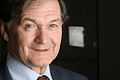
 United Kingdom of Great Britain and Northern Ireland
Explanation
In space there are places called black holes that pull everything toward them with very strong gravity. Roger Penrose used Einstein’s general theory of relativity and proved with mathematics that black holes can naturally form. You can picture it by imagining a star that runs out of fuel and is crushed by its own weight. Like water spiraling down a bathtub drain, even light and time cannot escape. His work provided powerful evidence that real black holes must exist in the universe. Today scientists are confirming them with photographs and gravitational-wave observations.
Related Keywords
black hole
A black hole is an astronomical object whose gravity is so intense that not even light can escape. At its center lies a singularity where density is thought to become infinite, surrounded by an event horizon. According to the no-hair theorem, it can be fully described only by its mass, angular momentum and electric charge. Black holes are believed to form through the collapse of massive stars or by mass accumulation at galactic centers. In recent years, their existence has been probed indirectly through gravitational waves and directly with the Event Horizon Telescope.
general relativity
General relativity is Einstein’s theory describing gravity as the curvature of spacetime. The larger the mass-energy content, the stronger the curvature becomes. Effects such as Mercury’s perihelion shift and the time corrections for GPS satellites have confirmed the theory experimentally. It also predicts extreme phenomena like black holes and the expansion of the Universe. Penrose’s work reinforced that these predictions are unavoidable consequences of the theory.
singularity
A singularity is a place where spacetime curvature becomes infinite and normal physical laws break down. The centers of black holes and the initial Big Bang state are prime examples. Because quantum effects cannot be ignored there, general relativity alone is insufficient to describe them. Developing a quantum theory of gravity is largely motivated by this limitation. Penrose’s singularity theorem provided a rigorous proof that such singularities are unavoidable under realistic conditions.
trapped surface
A trapped surface is a two-dimensional surface from which even outward-directed light rays converge toward the center. Its existence implies irreversible spacetime collapse leading to black-hole formation. In numerical relativity it is located on computational grids to identify newly born black holes. The surface provides the geometric starting point for singularity theorems. Future observations may connect its properties with the size and shape of photon rings around black holes.
event horizon
The event horizon is the boundary surrounding a black hole beyond which no causal signal can reach an outside observer. To a distant viewer, time for an infalling object appears to slow indefinitely as it approaches the horizon. The horizon’s radius scales with the black hole’s mass and is often called the Schwarzschild radius. For rotating black holes the shape flattens and bulges at the equator. The Event Horizon Telescope recently imaged the region near this boundary, confirming the predicted shadow.
gravitational waves
Gravitational waves are ripples in spacetime predicted by Einstein that propagate at the speed of light. They were first detected by LIGO in 2015, originating from a black-hole merger. Detailed analysis of their waveforms constitutes stringent tests of general relativity. Penrose’s theorem underpins these events by guaranteeing the stable formation of a black hole after the merger. Future detectors aim to observe waves from neutron-star binaries and the primordial Universe.