1907 Nobel Prize in Physiology or Medicine
Reason for Award
for his work on the role played by protozoa in causing diseases
Laureates
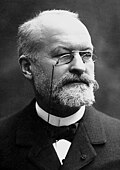
 France
Explanation
All around us live tiny organisms that we cannot see. Among them are "protozoa," single-celled creatures. The French doctor Alphonse Laveran looked at soldiers’ blood under a microscope and saw moving protozoa inside the red blood cells of people with malaria. He thought, "These protozoa must be causing the disease." This idea overturned the old belief that “bad air” made people sick. Thanks to his discovery, people learned to fight malaria by reducing mosquitoes and by developing medicines.
Related Keywords
protozoa
Single-celled eukaryotic organisms belonging to the animal kingdom; include diverse pathogens such as Plasmodium and Trypanosoma. They are often motile and possess complex life cycles that spread through hosts and vectors.
malaria
A tropical infectious disease caused by Plasmodium parasites, characterized by periodic fevers and anemia. Transmitted mainly by Anopheles mosquitoes, it remains one of the most significant parasitic diseases for global public health.
Plasmodium
A genus of parasitic protozoa in the phylum Apicomplexa that cause malaria. Species infecting humans include P. falciparum and P. vivax, completing part of their life cycle inside erythrocytes.
parasitology
The scientific discipline studying interactions between parasites and hosts, covering protozoa, helminths, and arthropods. It ranges from diagnosis and treatment of diseases to ecological control strategies.
vector
An organism that harbors a pathogen and transmits it to another host. In malaria the vector is Anopheles mosquitoes, whereas tsetse flies transmit trypanosomiasis.
microscopic diagnosis
A method that directly observes and identifies pathogens in blood or tissue using light microscopy. From Laveran’s era to today, it remains the gold standard for many parasitic infections.
hemolysis
The breaking open of red blood cells with the release of hemoglobin. Malaria’s fever cycles synchronize with parasite-induced hemolysis.
Anopheles mosquito
A genus of mosquitoes that transmit Plasmodium parasites. Only females blood-feed, and managing their habitats is crucial for disease control.