1909 Nobel Prize in Physiology or Medicine
Reason for Award
for his work on the physiology, pathology and surgery of the thyroid gland
Laureates
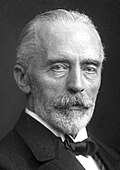
 Switzerland
Explanation
The thyroid is a small organ in the front of the neck that acts like a factory making an 'energy juice' for the whole body. Dr. Kocher studied why people become ill when this factory does not work properly. In the past, many patients with swollen thyroids bled heavily during surgery and died. He invented safe ways to stop the bleeding and saved many lives. Thanks to him, we can now be treated for thyroid diseases with confidence.
Related Keywords
thyroid gland
The thyroid gland is a butterfly-shaped endocrine organ located in front of the trachea. It captures iodine and secretes thyroxine (T4) and triiodothyronine (T3) to regulate body temperature, heart rate and growth. Hormone deficiency causes fatigue and developmental delay, whereas excess leads to palpitations and weight loss. Until the 19th century its role was unclear, but Kocher's postoperative observations established it as an endocrine organ. Today its function is assessed by blood tests and imaging, and treated with medication or surgery when diseased.
thyroxine
Thyroxine is an amino-acid-derived hormone produced by the thyroid and circulates mainly as T4. It is converted to T3 in peripheral tissues and binds nuclear receptors to activate metabolism-related genes. Kocher inferred its existence from symptoms appearing after total thyroidectomy decades before Kendall isolated it in 1915. Synthetic thyroxine is now the first-line therapy for hypothyroidism. Dosage is tailored by periodically monitoring serum TSH.
goiter
Goiter refers to an enlarged thyroid that is visible or palpable. It can arise from iodine deficiency, autoimmune disease or nodular overgrowth. Kocher perfected safe removal of diffuse endemic goiter in the Alps, dramatically lowering mortality. Massive goiters may still require surgery today because they compress the trachea or cause swallowing problems. Ultrasound and fine-needle aspiration are essential for differential diagnosis and treatment planning.
cretinism (congenital hypothyroidism)
Cretinism is a disorder caused by thyroid hormone deficiency during fetal or neonatal life, leading to intellectual disability and short stature. It was once common in iodine-poor inland regions and posed a major public-health problem. Kocher linked loss of thyroid tissue to these symptoms and emphasized the need for hormonal replacement. Today neonatal screening and early thyroxine therapy prevent nearly all cases. Iodised salt programmes have also reduced global incidence dramatically.
thyroidectomy
Thyroidectomy is a surgical procedure performed for benign enlargement, Graves' disease or thyroid cancer. Kocher established the fundamentals of layered dissection, clamp haemostasis and identification of the recurrent laryngeal nerve. Today nerve monitoring, endoscopic and robotic techniques make the operation even less invasive. Preserving residual tissue and blood supply is crucial to avoid postoperative hypothyroidism and parathyroid injury. Pre-operative imaging and postoperative hormone management are key to minimizing complications.
aseptic technique
Aseptic technique is a set of procedures that keep the surgical field free of microbes and prevent infection. Building on Lister's carbolic acid disinfection, Kocher applied strict antisepsis to thyroid surgery. Infection control was vital in the highly vascular thyroid region and directly lowered mortality. Modern operating rooms standardise scrubbing, sterile instruments, controlled airflow and prophylactic antibiotics. Aseptic technique remains a fundamental principle across all surgical disciplines.