1912 Nobel Prize in Physiology or Medicine
Reason for Award
for his work on vascular suture and the transplantation of blood vessels and organs
Laureates
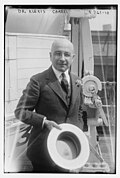
 France
Explanation
Alexis Carrel invented a clever way to sew together broken blood vessels. It is like joining two cut drinking straws so tightly that water cannot leak. Because of his stitches, doctors could fix injured vessels safely. He also tried moving organs from one body to another, showing that transplants could work. Thanks to his ideas, many people today can be saved after serious injuries.
Related Keywords
vascular suture
A surgical method for reconnecting severed arteries or veins. Carrel’s triangulation kept the vessel circular and prevented flow disturbance. The principle remains fundamental in modern microsurgery, minimizing stenosis and thrombosis at the anastomosis. It is applied in synthetic graft implantation and coronary-artery bypass surgery.
organ transplantation
The medical procedure of replacing diseased or damaged organs with healthy ones. Carrel transplanted kidneys and hearts in dogs, laying the foundation of transplant surgery. He exposed the challenge of immune rejection, motivating later development of immunosuppressive drugs. Today, kidneys, livers, hearts, lungs and more can be transplanted, dramatically improving survival.
anastomosis
A surgical connection between two hollow structures (vessels, intestines, etc.) to restore flow. Before Carrel, leakage and stenosis were common. His technique reduced operative time and complications, enhancing safety of major surgeries. Modern staplers and devices exist, but the core concept remains unchanged.
immune rejection
The process in which the recipient’s immune system attacks transplanted organs or tissues. Carrel’s animal studies first indicated its decisive role in graft survival. This insight led to HLA matching research and discovery of immunosuppressants. With modern protocols, long-term graft survival has markedly improved.
aseptic technique
Procedures that prevent microbial contamination of surgical fields, instruments, and hands. Carrel adopted strict aseptic technique to succeed in vascular suturing and transplantation. It reduced infection rates and made surgery safer. Modern clean rooms and sterilization protocols descend from these practices.
tissue culture
A technique for maintaining and growing cells or tissues outside the body in nutrient media. Carrel’s long-term culture experiments (the famous “immortal heart” work) drew attention and fostered progress in cell biology and regenerative medicine. Proper nutrients, temperature, and pH are crucial, and applications include vaccine production and cancer research.