1914 Nobel Prize in Physiology or Medicine
Reason for Award
for his work on the physiology and pathology of the vestibular apparatus
Laureates
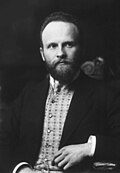
 Austro-Hungarian Empire
Explanation
When we stand or run without falling, a tiny part deep inside the ear called the “vestibule” senses how our body tilts. Dr. Bárány gently put warm or cold water into people’s ears to find out how this part works. He noticed that the eyes spin around (a movement called nystagmus) and showed how the brain feels turning and rocking. His work explains why our head feels dizzy after a ride on a spinning cup at an amusement park. Thanks to his discovery, doctors can now test why people feel vertigo. It even helps train airplane pilots to fly safely.
Related Keywords
vestibular apparatus
The vestibular apparatus, comprising semicircular canals and otolith organs, detects rotational and linear acceleration of the body. The canals sense three-dimensional rotation, whereas the otoliths register gravity and straight-line acceleration. Sensory hairs are deflected by endolymph flow or otoconia shift, transducing mechanical motion into electric signals. These signals travel via the vestibular nerve to the brainstem and cerebellum, promptly adjusting eye movement and postural reflexes. Bárány’s work was the first to systematize functional assessment of this apparatus and translate it into clinical testing.
semicircular canals
Three canals per side, mutually orthogonal, detect angular acceleration. Sensory hairs embedded in a gelatinous cupula are deflected when endolymph moves, producing excitation or inhibition. The horizontal canal chiefly senses yaw, while the anterior and posterior canals detect pitch and roll. Bárány artificially induced endolymph flow by temperature gradients, verifying each canal’s response. Modern electronystagmography and rotational chair tests stem from this methodology.
otolith organs
Composed of utricle and saccule, the otolith organs contain calcium-carbonate crystals (otoconia) embedded in a gelatinous membrane. Head tilt or linear acceleration shifts the membrane by otoconia inertia, bending underlying hair cells and altering membrane potentials. They are essential for posture control with respect to gravity, generating the sinking sensation in elevators or cars that suddenly accelerate. Dysfunction can allow free otoconia to enter canals, producing benign paroxysmal positional vertigo. Bárány’s analyses laid groundwork for understanding this pathology.
caloric test
The caloric test involves introducing water or air cooler or warmer than 37 °C into the external ear canal, eliciting endolymph convection that stimulates semicircular canals. Cold irrigation drives nystagmus to the opposite side, warm to the same side—summarized by the “COWS” rule. Analysis of side differences and duration discriminates peripheral vestibular lesions from central ones. Its simplicity and minimal equipment make it a global clinical standard. Bárány’s 1914 paper was the first to describe the test’s principles in detail.
nystagmus
Nystagmus consists of slow eye movements followed by rapid resetting, reflecting vestibulo-ocular reflex function and brainstem circuitry. It arises physiologically from rotation or thermal stimuli, but pathologic variants appear with brainstem/cerebellar lesions or drug intoxication. Bárány quantified nystagmus direction, strength, and duration, testing symmetry across canals. Modern infrared video systems (VOG) inherit his eye-movement analysis. Pattern interpretation of nystagmus is vital for vertigo diagnosis and for assessing spatial disorientation in aerospace medicine.
inner ear
Situated beyond the eardrum, the inner ear is a complex bony and membranous labyrinth consisting of the cochlea for hearing and the vestibular apparatus for balance. The cochlea transforms sound vibrations into electrical signals carried by the auditory nerve to the cerebral cortex. The vestibular part, composed of semicircular canals and otolith organs, senses body position and movement to maintain posture. Enclosed in dense bone and with a delicate blood supply, inner-ear structures recover poorly from ischemia or infection. Bárány’s work established functional testing for inner-ear disorders, accelerating advances in clinical otology.
sense of balance
Balance arises from integration of visual, vestibular, and somatosensory inputs, allowing precise perception of body posture and movement under gravity. The vestibular system supplies acceleration data, vision provides spatial orientation, and foot soles plus muscle spindles contribute ground-contact and tone information; these converge in the brainstem and cerebellum. Bárány experimentally dissected this integration and quantified vestibular contributions. His insights are now applied to prevent falls in the elderly and to mitigate VR-induced motion sickness. Understanding balance remains a fundamental concept for addressing disorders that disturb equilibrium.
vestibular neuritis
Vestibular neuritis involves inflammation of the vestibular nerve, often viral, causing sudden severe spinning vertigo and nausea. Hearing remains intact, but unilateral vestibular loss produces horizontal nystagmus and imbalance. Caloric and rotational tests reveal reduced responses on the affected side. Rehabilitation promotes contralateral compensation, yet some patients retain chronic unsteadiness. Bárány’s testing methods were crucial in establishing diagnostic criteria for this condition.