1919 Nobel Prize in Physiology or Medicine
Reason for Award
for his discoveries relating to immunity
Laureates
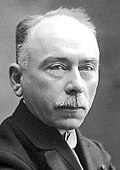
 Belgium
Explanation
Our bodies have a protection system called “immunity” that fights germs and viruses. Jules Bordet discovered that tiny parts inside our blood can stick to germs and break them apart, keeping us safe. Think of it like a helper vacuum cleaner that sucks up dirt (germs) before they cause trouble. Thanks to his work, doctors invented tests to see if someone has a certain disease and can treat it sooner.
Related Keywords
immunity
The body’s defense system that recognizes and eliminates pathogens or foreign substances. It is divided into innate and adaptive branches that coordinate physical barriers, phagocytes, complement, antibodies, and T cells. Bordet’s work clarified the role of humoral factors in adaptive immunity. The concept underpins vaccine development, autoimmune-disease research, and public-health practice.
complement
A set of roughly 30 serum proteins. When bound to antibody–antigen complexes, they activate sequentially to cause lysis, opsonization, and inflammation. Bordet first systematically demonstrated their existence and function, leading to complement-fixation diagnostics. Complement deficiencies predispose to severe infections and autoimmune diseases, giving the system high clinical relevance.
hemolysis
The destruction of red blood cells releasing hemoglobin into plasma. Bordet built a model in which complement and antibodies cooperate to lyse sheep erythrocytes, providing a practical immune-reaction assay. Hemolysis tests are applied in blood-group typing, complement-activity measurement, and investigating conditions such as drug-induced hemolytic anemia.
serology
The study of antibodies and antigens in serum used to diagnose infectious and immune disorders. It encompasses assays such as complement-fixation, ELISA, and immunofluorescence. Bordet pioneered serology, and its techniques are indispensable for transfusion medicine, vaccine evaluation, and epidemiological surveys.
Bordet–Gengou reaction
A form of the complement-fixation test devised by Bordet and Gengou. The presence or absence of complement fixation to antibody–antigen complexes indicates infection status. It evolved into assays such as the Wassermann test for syphilis and became a standard diagnostic technique in the early 20th century.
complement fixation test
A classical assay for detecting antibodies in serum. Antigen and complement are added to the sample, and residual complement is measured to qualify or quantify antibodies. It was the first large-scale diagnostic system directly derived from Bordet’s discovery, with applications ranging from infectious diseases to hormone measurement.
antibody
Y-shaped proteins produced by B cells that bind specifically to antigens. They neutralize pathogens, activate complement, and tag invaders for phagocytosis. As demonstrated by Bordet’s work, antibodies often act in concert with complement and other factors rather than alone.
antigen
A molecule recognized as “foreign” by the immune system. Proteins, glycans, and nucleic acids can serve as antigens, binding specifically to antibodies or T-cell receptors. Bordet’s complement-fixation test leveraged antigen–antibody complex formation to quantify antibodies. The antigen concept is central to vaccine design and allergy mechanisms.
bacteriology
A branch of microbiology that studies bacterial morphology, metabolism, and pathogenicity. It flourished from the late 19th to early 20th century through the work of Pasteur, Koch, Bordet, and others. Closely linked to immunology, it has greatly contributed to antibiotic development and infectious-disease control.
Bordetella pertussis
The Gram-negative bacillus that causes whooping cough, first isolated by Bordet. This discovery enabled vaccine development and serological diagnosis, markedly reducing infant mortality. It remains a key model for studying cellular toxins and immune-evasion mechanisms.