1931 Nobel Prize in Physiology or Medicine
Reason for Award
for his discovery of the nature and mode of action of the respiratory enzyme
Laureates
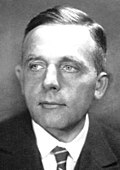
 German Reich
Explanation
Cells in our body use oxygen to turn food into energy. Dr. Otto Warburg proved that tiny helpers called “respiratory enzymes” make this happen. He used a special bottle to measure how much oxygen cells breathe. The tests showed that the enzyme takes in oxygen and helps produce energy. This discovery still supports medical research and new medicines today.
Related Keywords
respiratory enzyme
The term "respiratory enzyme," coined by Warburg, denotes the group of redox enzymes that use oxygen as the final electron acceptor inside cells. It mainly refers to the heme-containing cytochromes a and a3 whose iron cycles between Fe2+ and Fe3+ to transfer electrons. The enzyme catalyzes the four-electron reduction of O2 to H2O and, through proton-gradient formation, drives ATP synthesis. In modern nomenclature it corresponds to mitochondrial complex IV (cytochrome c oxidase). Defects in respiratory-enzyme activity underlie energy shortages in mitochondrial diseases and ischemic injury.
cytochrome
Cytochromes are iron-heme proteins that serve as electron carriers in cellular respiration. Their absorption spectra shift reversibly between oxidized and reduced forms, a property clarified by Warburg and Keilin. Several types—c, b, a, and others—possess stepwise redox potentials, allowing orderly electron transfer. Water-soluble cytochrome c diffuses in the inter-membrane space, whereas membrane-bound cytochromes b and a are integral parts of the electron transport chain. Structural studies now show that the amino-acid environment around each heme fine-tunes electron transfer rates.
oxidative phosphorylation
Oxidative phosphorylation is the process in which ATP synthase uses the proton gradient generated by the electron transport chain to convert ADP and inorganic phosphate into ATP. Warburg’s work on the respiratory enzyme laid the foundation for understanding this mechanism, later formalized in Mitchell’s chemiosmotic theory. The reaction occurs on the mitochondrial inner membrane as electrons donated by NADH or FADH2 travel through complexes I, III, and IV to oxygen. The resulting proton-motive force (Δp) powers ATP synthesis; failure of this system leads to lactic acidosis and neurodegenerative diseases. Current research focuses on dynamic reorganization of super-complexes and sub-complexes within the chain.
Warburg apparatus
The Warburg apparatus is an experimental setup consisting of a closed-system manometer and thermostatic bath, designed to monitor gas-pressure changes linked to sample respiration. A three-neck flask holds the biological sample, a gas-equilibration solution, and a manometric liquid, enabling quantification of oxygen uptake or CO2 release in micromoles. Constant temperature control allows high-sensitivity measurements even with small tissue slices or mitochondrial suspensions. The device was widely used to test respiratory inhibitors and measure photosynthetic rates, propelling biochemical research. Although replaced by oxygen electrodes and fluorescence probes, it remains an iconic instrument in metabolic studies.
Warburg effect
The Warburg effect refers to the tendency of cancer cells to rely heavily on glycolysis and lactate production even in the presence of oxygen. Warburg observed lower respiratory rates and higher glycolytic rates in tumor tissue and proposed metabolic reprogramming as a hallmark of cancer. Later studies revealed that transcription factor HIF-1 and PI3K-AKT signaling drive this metabolic shift. Uptake of 18F-FDG in PET imaging is a clinical application of the Warburg effect and helps evaluate treatment responses. Recent work explores its interplay with mitochondrial function and the tumor immune micro-environment, making it a target for new anticancer drugs.