1936 Nobel Prize in Physiology or Medicine
Reason for Award
for their discoveries relating to chemical transmission of nerve impulses
Laureates
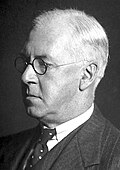
 United Kingdom of Great Britain and Northern Ireland
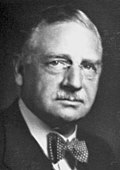
 United States of America
Explanation
There are thin strings in our body called nerves that carry messages from the brain to our hands and feet. In 1936, Dale and Loewi discovered that the message does not just travel like electricity; at the tiny gap between two nerves a chemical liquid named acetylcholine passes the baton. It is like putting a letter in a mailbox so the next person can read it. This process is called chemical transmission. Thanks to their discovery, we understand why our heart beats and our muscles move, and we can make medicines to help when something goes wrong.
Related Keywords
synapse
A synapse is the junction where a nerve cell passes information to another neuron or to a muscle cell. The two membranes do not touch; instead there is a synaptic cleft of only a few tens of nanometers. The presynaptic side contains tiny vesicles that, upon an arriving action potential, fuse with the membrane via calcium influx and release neurotransmitter molecules. The postsynaptic membrane is studded with receptors specific to each transmitter, triggering ion flows or intracellular signals when they bind. Synapses are plastic, meaning their strength can change, and this property underlies learning and memory.
acetylcholine
Acetylcholine is the first neurotransmitter ever identified and is synthesized from choline and acetyl-CoA. It is released at many peripheral synapses, including parasympathetic nerves and motor neurons controlling skeletal muscle. In the brain it is found in nuclei such as the basal forebrain and plays roles in attention and arousal. Because acetylcholinesterase breaks it down within milliseconds, the on-off timing of the signal is very sharp. Loss of cholinergic neurons is characteristic of Alzheimer’s disease, and cholinesterase inhibitors are used therapeutically.
neurotransmitter
A neurotransmitter is any chemical substance released by a neuron at the synapse to convey a signal to another cell. The class includes amino acids, monoamines, peptides, and even gaseous molecules. After release, transmitters are quickly removed by reuptake or enzymatic breakdown, preserving precise timing. Receptors fall broadly into ionotropic and G-protein-coupled categories, determining the speed and diversity of responses. Since Dale and Loewi established the chemical-transmission concept, hundreds of candidate molecules have been identified.
nicotinic receptor
Nicotinic receptors are ionotropic receptors for acetylcholine that are also activated by the tobacco compound nicotine. They occur in muscle and neuronal subtypes; the muscle form triggers contraction, whereas neuronal forms modulate arousal and reward pathways. Dale used nicotine pharmacologically to differentiate types of acetylcholine action, thereby demonstrating their existence. When the channel opens, Na⁺ and Ca²⁺ enter, depolarizing the cell. Neuromuscular blockers and smoking-cessation aids target this receptor family.
autonomic nervous system
The autonomic nervous system regulates heartbeat, breathing, digestion, and other unconscious functions and is divided into sympathetic and parasympathetic branches. Dale and Loewi showed that acetylcholine is released at parasympathetic nerve endings. The main sympathetic transmitter is noradrenaline, illustrating the diversity of chemical messengers. Dysfunctions of the autonomic system are associated with hypertension, arrhythmias, and stress-related disorders. Pharmacological manipulation of each branch greatly expands clinical treatment options.
frog heart experiment
Loewi’s frog heart experiment is regarded as decisive proof for chemical transmission. The vagus nerve of the first frog heart was stimulated, slowing its beat; the perfusate from this heart was then applied to a second heart, which likewise slowed. The active substance in the fluid, later identified as acetylcholine, was originally dubbed "Vagusstoff." The experiment ingeniously used viable tissue and a time-shifted transfer of the same stimulus. Despite its simplicity, it is highly reproducible and is illustrated in many textbooks.
synaptic cleft
The synaptic cleft is a narrow space of about 20–40 nm between the presynaptic and postsynaptic membranes. Neurotransmitter molecules traverse it by free diffusion in microseconds to milliseconds. The narrow gap localizes the signal and minimizes spill-over to neighboring synapses. It contains matrix proteins and enzymes that aid in transmitter breakdown and reuptake. Changes in cleft width or composition are studied as part of synaptic plasticity.
pharmacology
Pharmacology is the study of how drugs affect living organisms and the mechanisms underlying these effects. Dale used pharmacological methods to analyze acetylcholine, employing tobacco alkaloids and belladonna extracts to classify receptors. Pharmacology dissects biological responses by applying agonists and antagonists with defined specificity. This experimental approach underpins drug discovery and toxicological assessment. Even today it remains central to medical innovation alongside gene editing and biologics.
Dale's principle
Dale's principle states that a single neuron releases the same set of neurotransmitters at all of its terminals. Dale never formulated it rigorously, but the concept spread as an emphasis on transmitter specificity for each neuron. Exceptions such as cotransmission are now documented, so the principle is viewed as relative rather than absolute. Nevertheless, it provides a useful guideline for thinking about circuit design and gene-expression control. Single-cell RNA sequencing uses expression of transmitter-synthesis enzymes as a key for neuronal classification.
electrical conduction vs chemical transmission
Early nerve studies featured a debate between the electrical hypothesis, in which signals propagate purely as continuous electricity, and the chemical hypothesis, which posits a chemical step at the synapse. Dale and Loewi’s work provided strong evidence for the chemical hypothesis, establishing chemical transmission as the general rule. Later, electrical synapses formed by gap junctions were discovered, showing the hypotheses are complementary rather than exclusive. Electrical conduction offers speed and synchrony, while chemical transmission provides flexibility and plasticity. Together they give neural networks a rich range of time scales and functions.