1943 Nobel Prize in Physiology or Medicine(2)
Reason for Award
for the discovery of the chemical nature of vitamin K
Laureates
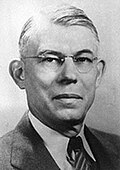
 United States of America
Explanation
Dr. Doisy was a scientist who wanted to know exactly what vitamin K looks like. He extracted the vitamin from alfalfa plants and carefully observed its color and smell. He found that vitamin K is a yellow oil-like substance closely associated with the green parts of plants. He also managed to create a synthetic form with the same action, turning it into a useful medicine. Thanks to his work hospitals could easily administer vitamin K and save many lives. In a sense, Dr. Doisy discovered the recipe for the magic that stops bleeding.
Related Keywords
phylloquinone
Phylloquinone, commonly called vitamin K1, is the prototypical form of vitamin K. It is a branch product of the plastoquinone biosynthetic pathway and acts as an electron carrier in chloroplasts. The phytyl side chain confers high hydrophobicity, leading to accumulation in green plant tissues. Humans absorb dietary phylloquinone in the intestine and deliver it to the liver for clotting-factor synthesis. Doisy’s structural elucidation enabled its chemical synthesis and quantitative analytical measurement.
menaquinone
Menaquinone refers to vitamin K2 compounds characterized by an isoprenoid side chain of varying length. They are synthesized by intestinal bacteria; series such as MK-4 and MK-7 are well known. Menaquinones are transported not only to the liver but also to bone and vascular walls where they exert localized functions. Recent studies suggest long-chain menaquinones attenuate atherosclerosis and improve bone density. Doisy’s chemical work laid the foundation for classifying menaquinones by comparing their structures with phylloquinone.
menadione
Menadione is a synthetic compound known as vitamin K3. Compared with natural phylloquinone it has a shorter side chain, making it easier to formulate as hydroxide or salt. In vivo it is converted to MK-4 by side-chain prenylation and thereby exhibits vitamin K activity. It was once widely used in animal feed and medicine, but high doses showed hemolytic toxicity and its use is now restricted. Doisy’s demonstration of menadione’s hemostatic activity became a model for developing vitamin analogues.
naphthoquinone backbone
The naphthoquinone backbone refers to a fused aromatic ring bearing a 1,4-quinone. Its high electron-accepting capacity allows participation in redox cycles as electron carriers or co-factors. It is the core structure in vitamin K, certain antibiotics and pigments such as lapachitol. Chemical synthesis often employs Friedel–Crafts acylation or Diels–Alder reactions to construct the skeleton. Doisy’s work established vitamin K as the first biologically active naphthoquinone and opened new avenues in quinone chemistry.
synthetic vitamin
Synthetic vitamins are chemically manufactured molecules exhibiting the same biological activity as their natural counterparts. Because they can be mass-produced economically, they are widely used in pharmaceuticals and dietary supplements. Examples include vitamin K3 and sodium ascorbate for injection. Accurate structural elucidation is prerequisite for synthesis, and Doisy’s work served as an early milestone. However, stereochemical purity and toxicity profiles may differ from natural forms, requiring stringent quality control.
antihemorrhagic drug
Antihemorrhagic drugs are medicines used to stop or prevent bleeding. Vitamin K preparations are classic antihemorrhagics, employed to reverse warfarin overdose and treat neonatal hemorrhagic disease. Other agents include thrombin preparations and tranexamic acid, which act through different mechanisms. Choice of drug depends on pathology, route of administration and required speed of action. Doisy’s work on synthetic vitamin K pioneered the development of safe and affordable antihemorrhagics.