1944 Nobel Prize in Physiology or Medicine
Reason for Award
for their discoveries relating to the highly differentiated functions of single nerve fibres
Laureates
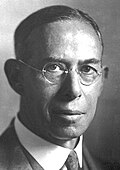
 United States of America
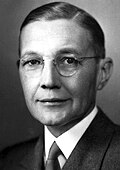
United States of America
Explanation
Our bodies are full of tiny electric cables called nerves. Erlanger and Gasser discovered that thick nerves carry the electric signal faster than thin ones. Think of a fast train and a slow bicycle on different tracks. Thanks to this difference, you pull your hand back from something hot instantly, and only later feel a dull ache. Their finding helps doctors understand and treat injuries or illnesses that damage nerves.
Related Keywords
nerve fibre
The axonal part of a neuron that carries electrical signals over long distances. Conduction velocity and function differ markedly according to diameter and presence of myelin. Erlanger and Gasser classified fibres by size and showed that signal modality maps onto fibre properties. The modern A, B, and C classification originates from their work. Clinically, conduction delay serves as an index for demyelinating diseases and diabetic degeneration. In neuro-engineering, fibre taxonomy guides the design of stimulation parameters.
action potential
A rapid membrane voltage change involving depolarisation and repolarisation that lasts ~1 ms and forms the basic unit of neural information. Erlanger and Gasser temporally resolved compound action potentials with a fast oscilloscope, extracting single-fibre components. This clarified relationships among fibre diameter, peak amplitude, and upstroke velocity. Modern patch-clamp techniques refine single-action-potential recording, but their conceptual root lies in the 1940s studies. Action-potential analysis is also applied in evaluating neurotoxic effects of drugs.
conduction velocity
The speed at which an impulse travels along an axon. It increases with diameter and the presence of a myelin sheath. Erlanger and Gasser measured velocities ranging from tens to hundreds of m/s and proposed a square-root relation with diameter. Conduction velocity is measured in nerve conduction studies as a diagnostic index for demyelination or axonal injury. In sports medicine it informs reflex-time analysis, and in robotics it inspires artificial neural-network timing. Recent work incorporates temperature dependence and pathology into computational models.
myelin sheath
A lipid-rich insulating structure formed by Schwann cells or oligodendrocytes. Enables saltatory conduction and boosts velocity by orders of magnitude. In Erlanger and Gasser’s scheme, A and B fibres are myelinated whereas C fibres are unmyelinated. Demyelinating diseases such as multiple sclerosis drastically slow conduction. Regenerative medicine is exploring artificial myelin production. Neuro-interface design also considers electrode placement relative to myelin distribution.
electrophysiology
The study of biological electrical phenomena to elucidate function. It includes ECG and EEG, but single-unit nerve analysis advanced dramatically with Erlanger and Gasser’s innovations. Their amplifier-oscilloscope setup influenced Hodgkin and Huxley’s squid-axon work. Today, multi-electrode arrays and optogenetics allow circuit-level visualisation. Clinically, electrophysiology guides pacemaker implantation and epilepsy focus localisation. Future advances may come from nanodevices and quantum sensors.
sensory and motor nerves
Sensory nerves carry information from skin or organs to the brain, while motor nerves send commands from the brain or spinal cord to muscles. Erlanger and Gasser showed that these functions correlate with fibre diameter: large Aα fibres rapidly convey motor commands, whereas thin C fibres relay dull pain. Matching structure and function represents an evolutionary strategy for neural efficiency. Rehabilitation research now explores separate stimulation of these systems to enhance recovery. Robotics mimics bidirectional communication for tactile-feedback prosthetic hands.
cathode-ray oscilloscope
A device that visualises voltage waveforms using an electron beam inside a vacuum tube. In the 1940s it was one of the few instruments capable of real-time microsecond resolution. Erlanger and Gasser modified the horizontal sweep and vertical amplification to boost sensitivity and directly observe single-fibre potentials. This allowed decomposition of compound waveforms and clarification of fibre-specific properties. The oscilloscope later evolved through transistor and digital stages into today’s high-bandwidth scopes and opto-electronic instruments. It exemplifies how instrumentation progress drives scientific breakthroughs.