1951 Nobel Prize in Physiology or Medicine
Reason for Award
for his discoveries concerning yellow fever and how to combat it
Laureates
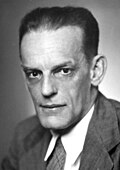
 Union of South Africa
Explanation
Yellow fever is a high-fever illness that spreads when certain mosquitoes bite people. Long ago, many people in Africa and South America lost their lives because of it. Max Theiler found a way to make a vaccine by using a weakened form of the yellow-fever virus. Thanks to this, our bodies can learn how to fight the germ without getting sick. Today, one shot of this vaccine protects almost a whole lifetime. Theiler’s discovery gave the world a strong shield that saves countless lives.
Related Keywords
Yellow fever virus
A single-stranded RNA virus in the family Flaviviridae. Transmitted by mosquitoes such as Aedes aegypti and causes high fever, jaundice, and hemorrhage in humans. Differences in the E protein and other regions distinguish the attenuated 17D strain from wild-type strains, accounting for their divergent pathogenicity and immunogenicity.
Live attenuated vaccine
A vaccine created by artificially weakening a pathogen and administering it in a living form to elicit immunity. Because the response mimics natural infection, long-lasting protection is expected, although caution is needed in immunocompromised individuals. The yellow-fever 17D strain is a textbook example of a successful live attenuated vaccine.
17D strain
The attenuated yellow-fever virus strain developed by Max Theiler through serial passage in chick embryos. It has lost its pathogenicity and is still used worldwide. A single dose induces high-titer neutralizing antibodies that last for decades and exhibits an excellent safety profile.
Mosquito-borne disease
A collective term for diseases transmitted by mosquitoes, including yellow fever, dengue, and malaria. Climate change and urbanization are expanding their geographic range, posing significant challenges to public health.
Aedes aegypti
A mosquito species that serves as the principal vector for yellow-fever virus. It breeds near human dwellings and bites primarily during daylight hours. Larval source reduction and insecticide spraying are fundamental strategies for preventing transmission.
Virus passaging
The process of repeatedly infecting new host cells or animals with a virus. Accumulated mutations can alter virulence and host adaptation. It has long been used as a means of attenuation in vaccine development.
Immunogenicity
The ability of an antigen to elicit an immune response in an organism. Vaccine assessment measures it via neutralizing antibody titers and T-cell activity. The 17D strain is noted for its high immunogenicity, often conferring lifelong immunity with a single dose.
Flavivirus genus
A group of RNA viruses that includes yellow fever, dengue, Zika, and West Nile viruses. They share common envelope structures and a polyprotein translation strategy, with similar mechanisms for evading host responses. Phylogenetic and cross-immunity studies consider these features crucial.