1952 Nobel Prize in Physiology or Medicine
Reason for Award
for his discovery of streptomycin, the first antibiotic effective against tuberculosis
Laureates
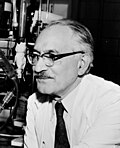
 United States of America
Explanation
Streptomycin is a medicine that was found in a substance made by bacteria living in soil. Dr. Waksman discovered that this drug can kill the germs that cause tuberculosis, a disease that used to be very scary. Tuberculosis spreads by coughing and sneezing and damages the lungs. Thanks to streptomycin, many people could be cured and their lives were saved. In other words, tiny organisms in the ground provided a big help to human health.
Related Keywords
streptomycin
Streptomycin is an aminoglycoside antibiotic and a secondary metabolite produced by Streptomyces griseus. It binds to the bacterial 30S ribosome and blocks protein synthesis, exerting bactericidal activity. The drug is effective against tuberculosis bacilli and many Gram-negative bacteria, including strains resistant to penicillin. Introduced clinically in 1944, it revolutionized tuberculosis therapy worldwide. Today it is mainly employed in combination regimens to curb resistance and is also used for difficult infections.
tuberculosis
Tuberculosis is a chronic infectious disease caused by Mycobacterium tuberculosis, primarily affecting the lungs and characterized by prolonged cough, blood-tinged sputum, and fever. From the Industrial Revolution through the early 20th century it spread globally and was a leading cause of death. Because it is airborne, it posed severe problems in densely populated urban areas. Antibiotics, vaccination, and improved hygiene have reduced incidence, yet the disease still kills over a million people each year. The rise of multidrug-resistant tuberculosis remains a major global health challenge.
antibiotic
Antibiotics are compounds produced by microorganisms that inhibit the growth of or kill other microbes. Since the clinical adoption of penicillin in the 20th century, they have become the mainstay of infectious-disease therapy. Their mechanisms of action include inhibition of cell-wall synthesis, protein synthesis, and DNA functions, among others. Overuse or inappropriate use promotes the emergence of resistant strains, creating serious public-health issues. Discovering new antibiotics and ensuring their prudent use are global priorities.
actinomycetes
Actinomycetes are Gram-positive bacteria with radiating mycelia, widely found in soil and marine sediments. They produce complex secondary metabolites and are a major source of antibiotics. Drugs such as streptomycin, tetracycline, and erythromycin originate from actinomycetes. Their genomes harbor numerous biosynthetic gene clusters capable of generating yet-undiscovered compounds. Modern metagenomics and synthetic-biology approaches are actively mining these organisms for new therapeutics.
Mycobacterium tuberculosis
Mycobacterium tuberculosis is the etiological agent of tuberculosis and is an acid-fast rod-shaped bacterium. Its cell wall contains mycolic acids, producing a lipid barrier that hinders drug penetration and complicates treatment. The organism divides slowly and can persist in a latent state for years. Without prolonged multidrug therapy, resistant strains readily arise, posing a worldwide public-health threat. Genomic studies have elucidated virulence factors and resistance mechanisms, guiding the search for new drug targets.
drug-resistant bacteria
Drug-resistant bacteria are strains that no longer respond to antibiotics, making infections difficult to treat. Resistance arises through chromosomal mutations or acquisition of resistance genes on plasmids. Streptomycin-resistant tuberculosis bacilli were documented soon after the drug’s introduction, highlighting the need for combination therapy. Resistant bacteria raise healthcare costs and lengthen hospital stays. Prudent antibiotic use, infection control, and new drug development are central to addressing the problem.
soil microorganism screening
Soil microorganism screening examines compounds produced by soil microbes to discover useful antibiotics and enzymes. Waksman cultured large numbers of actinomycetes on media and systematically tested their extracts for pathogen inhibition, a strategy that yielded streptomycin and many later drugs. Modern high-throughput sequencing and robotics have greatly increased screening efficiency. The approach now aids discovery not only of medicines but also of agents for bioremediation and improved agriculture. It remains a cornerstone of natural-product research.
combination therapy
Combination therapy uses multiple drugs simultaneously to suppress resistance and enhance efficacy. Because streptomycin monotherapy quickly led to resistant tuberculosis strains, it was combined with PAS and later isoniazid. Mixing agents with different mechanisms lowers the probability that bacteria will simultaneously acquire resistance to them all. Combination regimens can also reduce side effects and shorten treatment duration. The same principle is widely applied in anti-HIV therapy and cancer treatment.