1957 Nobel Prize in Physiology or Medicine
Reason for Award
for his discoveries relating to synthetic compounds that inhibit the action of certain body substances, and especially their action on the vascular system and the skeletal muscles
Laureates
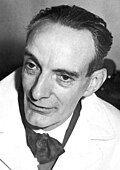
 Italy
Italy
Explanation
When you have hay fever you sneeze and itch because a chemical called histamine flips those body switches. Daniel Bovet invented man-made medicines that block that switch. Taking the drug stops histamine from working and eases the symptoms. He also discovered medicines that relax muscles so doctors can operate safely. These drugs use the body’s key-and-lock system in a clever way. Many everyday allergy and cold remedies trace back to his discovery.
Related Keywords
antihistamine
Antihistamines competitively block the histamine H1 receptor and thus reduce sneezing, runny nose and itching associated with allergies. Bovet’s first-generation drugs caused drowsiness, but later molecules with improved selectivity and polarity greatly lowered central side-effects. Today a variety of nasal, ocular and oral formulations treat diseases ranging from seasonal rhinitis to chronic urticaria. The concept also inspired drugs targeting other histamine receptors such as H2 blockers for peptic ulcers and reflux disease. Antihistamines remain a textbook example of balancing selectivity with adverse effects in pharmacology.
histamine
Histamine is a biogenic amine derived from the amino acid histidine and mediates allergy, inflammation and gastric acid secretion. Released from mast cells and basophils it acts on H1 receptors to cause vasodilation and bronchoconstriction. In the brain it participates in wakefulness, and H3 receptors modulate its own release. Excess liberation triggers urticaria and anaphylaxis, making antihistamine therapy clinically essential. Conversely, deficiency can reduce gastric acid or disturb sleep, illustrating histamine’s diverse physiological roles.
receptor antagonist
Receptor antagonists bind to the same site as endogenous ligands and block downstream signalling. Competitive antagonists shift dose–response curves to the right and allow calculation of pA2 via Schild analysis. Non-competitive or irreversible types reduce maximal response and are often used when a long duration of action is desired. β-blockers for hypertension, calcium-channel blockers and H2 antagonists for ulcers are classic therapeutic examples. Antagonist development drove advances in structure–activity relationships by analysing steric and electronic properties of binding sites.
acetylcholine receptor
Acetylcholine receptors exist in two main families: nicotinic muscle-type and muscarinic neuronal-type. The neuromuscular nicotinic receptor is a pentameric ion channel whose binding of acetylcholine allows Na influx and triggers muscle contraction. Curare-like antagonists occupy the binding site and block this depolarisation, producing muscle relaxation. Mutations in the receptor can cause congenital myasthenic syndromes, and pharmacological testing aids diagnosis and therapy. Structural elucidation of receptor subunits now permits precise rational drug design.
neuromuscular blockade
Neuromuscular blockade temporarily stops transmission at the neuromuscular junction so muscles remain still during surgery. Non-depolarising drugs act by competitive antagonism, whereas agents like succinylcholine cause prolonged depolarisation. Block depth is quantified with the train-of-four stimulus, and overdose risks respiratory paralysis. Bovet’s work improved selectivity and safety margins, leading to faster postoperative recovery. Modern practice employs specific reversal drugs such as sugammadex for rapid antagonism.
muscle relaxant
Muscle relaxants reduce skeletal-muscle tone and are essential for surgery and tracheal intubation. Non-depolarising agents such as pancuronium block acetylcholine receptors, whereas depolarising drugs like succinylcholine cause sustained depolarisation. Doses are tailored to body weight and organ function, and each drug has distinct duration and side-effect profiles. Neuromuscular monitoring guides timely administration of antagonists or sugammadex to protect breathing. Advances in relaxants have made minimally invasive and prolonged surgeries far safer.
vasodilation
Vasodilation is the relaxation of vascular smooth muscle that lowers blood pressure and increases organ perfusion. It is triggered by mediators such as histamine, nitric oxide and prostaglandins acting on endothelial or smooth-muscle receptors. Excessive vasodilation can cause anaphylactic shock, making clinical control vital. Bovet’s antihistamines suppress histamine-induced vasodilation, easing allergy symptoms and hypotensive episodes. Understanding vasodilatory mechanisms underlies the design of antihypertensive and anti-anginal drugs.