1962 Nobel Prize in Physiology or Medicine
Reason for Award
for their discoveries concerning the molecular structure of nucleic acids and its significance for information transfer in living material
Laureates

 United States of America

 United Kingdom of Great Britain and Northern Ireland
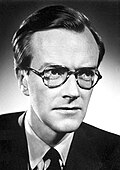
United Kingdom of Great Britain and Northern Ireland,  New Zealand
Explanation
Our bodies are made of many cells. Inside each cell there is a very thin thread-like substance called DNA. DNA works like an instruction book that decides things such as our height and eye color. Watson, Crick and Wilkins discovered that DNA looks like a twisted ladder, a “double helix.” The rungs of the ladder fit together like puzzle pieces, carrying the right order of information. Thanks to their discovery, scientists can now study diseases better and make stronger crops.
Related Keywords
nucleic acid
Nucleic acids are high-molecular-weight compounds in living cells that store and transmit hereditary information. There are two main classes—DNA (deoxyribonucleic acid) and RNA (ribonucleic acid)—each built from repeating nucleotide units composed of phosphate, sugar, and base. The order of bases encodes instructions for protein synthesis and cellular regulation. Because nucleic acids can replicate themselves, they constitute the fundamental medium of evolution and heredity. In medicine they are prime targets for genetic diagnostics, vaccines, and nucleic-acid therapeutics. The 1962 double-helix discovery first clarified how nucleic-acid structure is intimately linked to function.
DNA double helix
The DNA double helix comprises two polynucleotide strands that coil around each other in a right-handed helix. It has a diameter of about 2 nm and 10 base pairs per turn in the canonical B-form. Strands are held together by hydrogen bonds between complementary bases, permitting accurate replication. The hydrophobic bases stack inside, while the sugar-phosphate backbone faces the aqueous environment. Major and minor grooves created by the geometry guide site-specific binding of proteins. The Watson–Crick model remains the coordinate framework of modern genomics.
base pair
A base pair is a unit formed when two nucleobases bond via hydrogen bonds across the DNA or RNA duplex. In DNA the canonical pairs are adenine–thymine and guanine–cytosine. Because the number and geometry of hydrogen bonds are specific, mis-pairing is minimized, ensuring high replication fidelity. Base-pairing underlies techniques such as PCR and DNA sequencing. Genetic mutations often arise when the pairing rule is violated. The Watson–Crick model showed that base pairing is the key mechanism of information copying.
X-ray diffraction
X-ray diffraction is a technique in which X-rays scatter off crystals or fibers; analysis of the pattern reveals molecular structure. Rosalind Franklin’s “Photo 51” of DNA displayed a characteristic cross pattern indicative of a helix. From such data, parameters like helical pitch and base-pair spacing were calculated. Today the method is widely used to determine atomic structures of proteins, viruses and nanomaterials. Synchrotron sources have dramatically improved resolution. Watson and Crick’s proposal pioneered the use of diffraction data to guide molecular modeling.
complementarity
Complementarity refers to the rule that each nucleic-acid base pairs only with a specific partner. Supported by Chargaff’s rules, it enables faithful self-replication of sequence information. Because one complementary strand serves as a template, semi-conservative replication is possible. Nucleic-acid drugs such as miRNAs exploit complementarity to modulate gene expression. Bioinformatics tools calculate complementary pairing to design primers and guide RNAs. The concept is central to experimental planning and biotechnology development.
central dogma
The central dogma outlines a unidirectional flow of information: DNA → RNA → protein. DNA is transcribed into RNA, which is translated into an amino-acid sequence. Although exceptions such as reverse transcription exist, the core pathway remains valid. The dogma organized research on gene expression control and signaling pathways. Technologies like genome editing and synthetic biology essentially engineer each step of the dogma. The concept is still a cornerstone in biology education and research.
Chargaff's rules
Chargaff’s rules describe DNA base composition: the amount of A equals T, and G equals C. Although overall base ratios differ between species, complementary base ratios are always 1:1. Watson and Crick used this observation to infer specific base pairing. The rules are naturally explained only if DNA is a double helix, thus strongly supporting the model. Today, GC content derived from Chargaff’s insight is used in genome comparisons and gene-density estimations. Deviations from expected ratios can indicate mutation rates or DNA damage.