1963 Nobel Prize in Physiology or Medicine
Reason for Award
for their discoveries concerning the ionic mechanisms involved in excitation and inhibition in the peripheral and central portions of the nerve cell membrane
Laureates
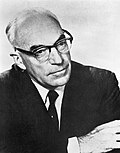
 Australia

 United Kingdom of Great Britain and Northern Ireland

United Kingdom of Great Britain and Northern Ireland
Explanation
Inside our bodies, many thin threads called nerves run like electric wires. When a nerve turns on, tiny particles called ions move in and out of the cell. Mr. Eccles, Mr. Hodgkin and Mr. Huxley discovered that these particles pass through little doors in the nerve cell membrane, switching the nerve on or off. Thanks to them, we now understand better how the brain thinks and the body moves.
Related Keywords
ion channel
An ion channel is a membrane-spanning protein that acts as a gate, allowing only specific ions to pass. Voltage-gated channels open and close in response to changes in membrane potential, whereas ligand-gated channels open when molecules such as neurotransmitters bind. The Hodgkin–Huxley work functionally demonstrated voltage-gated sodium and potassium channels for the first time. Subsequent gene cloning and X-ray crystallography revealed their structures, accelerating our understanding of channelopathies and drug discovery. Today, light-sensitive channels are exploited in optogenetics and many other applications.
action potential
An action potential is a rapid change in voltage produced by neurons or muscle cells that propagates information over long distances. Within a few milliseconds the membrane potential rises from a resting value (about −70 mV) to positive values (~+30 mV) and returns. Depolarization is driven by sodium influx and repolarization by potassium efflux. The time constants and conductance changes of voltage-gated channels shape the waveform and are quantified by the Hodgkin–Huxley equations. In myelinated axons, saltatory conduction enables velocities exceeding 100 m s⁻¹.
synapse
A synapse is the communication junction between neurons or between a neuron and another cell. In chemical synapses, an arriving electrical signal triggers vesicular release of neurotransmitters that open receptor channels, exciting or inhibiting the next cell. Electrical synapses rely on gap junctions through which ions flow directly, providing high-speed transmission. Eccles distinguished excitatory (EPSP) and inhibitory (IPSP) events at chemical synapses and clarified their ionic basis. Synaptic plasticity underlies learning and memory and is intensely studied with respect to drug addiction and psychiatric disorders.
excitatory potential
An excitatory postsynaptic potential (EPSP) depolarizes the membrane, increasing the likelihood of firing an action potential. It arises chiefly from increased permeability to sodium or calcium ions and involves receptors such as glutamate or nicotinic acetylcholine receptors. Multiple EPSPs summate temporally and spatially; when the threshold is exceeded the neuron fires. This additive mechanism performs logical operations in neural circuits and is emulated in neuromorphic computing.
inhibitory potential
An inhibitory postsynaptic potential (IPSP) hyperpolarizes or clamps the membrane potential near rest, reducing the chance of firing. Opening of chloride channels (GABA_A receptors) also produces a shunt that lowers input resistance, contributing to inhibition. Eccles quantitatively recorded IPSPs and explained coordinated control of motor neurons. Failure of inhibition is implicated in epilepsy and anxiety disorders, making GABAergic drugs important therapeutics.
Hodgkin–Huxley equations
The Hodgkin–Huxley equations are differential equations describing the time evolution of the membrane potential using a conductance-based electrical circuit model. Gate variables m, h, and n represent the open probabilities of ion channels, each governed by voltage-dependent rate constants α and β. The model reproduces firing thresholds, spike shapes, refractory periods and many other phenomena. It is widely used for simulating biological signal processing and designing spiking neural networks in artificial intelligence.
voltage clamp
The voltage-clamp technique holds the membrane potential at a user-defined value while measuring ionic currents. Hodgkin and Huxley developed it to separate sodium and potassium current components over time. Today, the patch-clamp is its advanced form and is indispensable for drug screening and functional analysis in transgenic mice. Voltage-clamp data directly inform quantitative channel-kinetic models and elucidate pharmacological mechanisms.