1968 Nobel Prize in Physiology or Medicine
Reason for Award
for their interpretation of the genetic code and its function in protein synthesis
Laureates
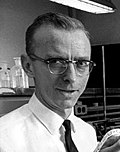
 United States of America

United States of America
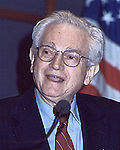
United States of America
Explanation
Our bodies are made of cells, and inside each cell is DNA, the instruction book of life. When a cell wants to read DNA, it first makes a messenger called RNA. Holley, Khorana and Nirenberg discovered that sets of three RNA “letters” tell the cell which amino acid—the tiny building blocks—should be added next. It is like a LEGO guide showing which colored brick goes where. Thanks to their work, we now understand how the body builds proteins for hair, muscles and more, which helps scientists study diseases and invent new medicines.
Related Keywords
genetic code
The genetic code is a correspondence table in which every three-base codon in DNA or RNA specifies one amino acid or a termination signal. It is nearly universal across all life, underscoring the common ancestry of organisms. Deciphered in the 1960s, 64 codons map to 20 amino acids plus three stop signals. Redundancy (degeneracy) in the code buffers organisms against mutations. Codon optimization and the introduction of non-canonical amino acids in biotechnology exploit this principle.
codon
A codon is a set of three consecutive nucleotides on mRNA that base-pairs with the anticodon of a tRNA. The start codon AUG encodes methionine and defines the ribosomal reading frame, whereas stop codons UAA, UAG and UGA signal termination. There are 64 codons, and their assignments to amino acids are redundant. Usage frequency differs among species (codon bias), influencing gene expression levels.
tRNA
Transfer RNAs are 70-90-nucleotide molecules with a clover-leaf secondary structure and an L-shaped tertiary fold. The anticodon loop reads mRNA codons, while the 3′ CCA terminus carries the cognate amino acid. Aminoacyl-tRNA synthetases ensure translational fidelity by specifically charging tRNAs. Numerous modified bases facilitate wobble pairing and fine-tune translation speed. Synthetic biology engineers tRNAs to insert non-canonical amino acids and expand the genetic code.
mRNA
Messenger RNA is transcribed from DNA and serves as the template for protein synthesis on ribosomes. It contains a 5′ cap, 5′ untranslated region, coding region, 3′ UTR and poly-A tail. The codon sequence determines the amino-acid sequence of the protein. mRNA vaccines incorporate modified bases and optimized codons to efficiently express antigenic proteins and elicit immune responses. mRNA stability and translational efficiency are regulated by secondary structures and associated proteins.
translation
Translation converts the codon sequence of mRNA into an amino-acid sequence on the ribosome and proceeds via initiation, elongation and termination. During initiation, the start codon AUG is recognized by initiator tRNA on the small ribosomal subunit. Elongation brings successive aminoacyl-tRNAs, forms peptide bonds and translocates the ribosome to extend the polypeptide chain. Termination occurs when a stop codon is recognized by a release factor, leading to peptide release. Many antibiotics and toxins act by inhibiting specific steps of translation, conferring bactericidal or cytotoxic effects.
aminoacyl-tRNA synthetase
Each amino acid is paired with at least one aminoacyl-tRNA synthetase that recognizes its cognate tRNA and attaches the amino acid. A two-step activation (formation of an aminoacyl-AMP intermediate followed by transfer to tRNA) ensures high specificity, and many enzymes possess editing domains that hydrolyze mis-charged products. Error rates are as low as one in 10,000, underpinning accurate decoding. Mutations in these enzymes cause certain genetic and autoimmune disorders. Engineered synthetases enable incorporation of non-canonical amino acids into proteins.
poly-U experiment
In 1961 Nirenberg and Matthaei added synthetic RNA composed solely of uracil (poly-U) to an E. coli extract and observed that the resulting polypeptide consisted exclusively of phenylalanine. This provided the first decisive evidence that the codon UUU encodes phenylalanine. The approach was extended to other homo- and copolymer RNAs, opening the path to decoding the genetic code. Radioactive 14C-labeled phenylalanine was used to quantify incorporation.
clover-leaf structure
The clover-leaf is the canonical secondary-structure diagram of tRNA, featuring four arms (acceptor stem, D arm, anticodon arm, TψC arm) plus a variable loop, resembling a four-leaf clover. Holley first deduced the full sequence and proposed this model. The tertiary structure folds into an L-shape, spatially separating the amino-acid attachment site from the anticodon for ribosomal function. Numerous modified bases in the D and TψC arms stabilize proper folding and aid ribosomal recognition. The clover-leaf model is widely used for tRNA annotation and alignment.
stop codon
The three stop codons—UAA, UAG and UGA—do not encode amino acids but signal termination of translation. Release factors bind to the ribosome at these codons, hydrolyzing the peptidyl-tRNA bond to release the completed protein. Mutations that create premature stops cause truncated, often non-functional proteins. Some viruses and bacteria repurpose stop codons to compress genetic information. Therapeutic strategies include drugs that induce stop-codon read-through and genome editing to repair nonsense mutations.
codon degeneracy
Because 64 codons encode only 20 amino acids, several codons specify the same amino acid—a feature known as degeneracy. Wobble pairing at the third base is a major contributor, enhancing genetic robustness and modulating translation speed. Degeneracy makes many point mutations silent, increasing evolutionary flexibility. Codon usage frequencies vary among species and correlate with tRNA abundance and expression efficiency. Synthetic genetics seeks to reassign redundant codons to insert new amino acids or functions.