1975 Nobel Prize in Physiology or Medicine
Reason for Award
for their discoveries concerning the interaction between tumour viruses and the genetic material of the cell
Laureates
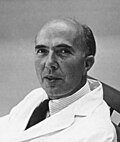
 United States of America
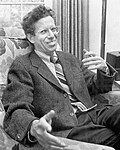
United States of America

United States of America
Explanation
Viruses are tiny particles that get into our body’s cells and make more copies of themselves. Drs. Dulbecco, Temin, and Baltimore found that some cancer-causing viruses can mix their own genetic instructions into the cell’s DNA. This can make the cell behave badly and turn into a cancer cell. By learning this, scientists gained clues about how to detect and stop cancer earlier. Their discovery helps us stay healthier in the future.
Related Keywords
tumour virus
A collective term for viruses capable of inducing cancer. It includes DNA viruses such as SV40 and papillomaviruses and RNA viruses of the retrovirus family. They hijack host growth-control signals and chronically stimulate the cell cycle, triggering tumour formation. Intensive study became possible after the advent of cell culture techniques in the 1950s, greatly advancing genetic insights into cancer. The concept also underlies today’s cancer vaccines and oncolytic virus therapies.
retrovirus
A virus with a single-stranded RNA genome that is reverse-transcribed into DNA by reverse transcriptase. The resulting proviral DNA integrates into the host genome, enabling long-term latent infection. Many retroviruses carry oncogenes and were classical model systems in tumour biology. HIV-1 is a member of this family, and reverse-transcriptase inhibitors are key antiretroviral drugs. Engineered retrovectors are widely used in gene therapy.
reverse transcriptase
An RNA-dependent DNA polymerase that synthesizes DNA from an RNA template. Independently discovered by Temin and Baltimore in 1970. It overturned the one-way view of the central dogma and revolutionized molecular biology. The enzyme is indispensable for techniques such as cDNA library construction and RT-PCR. It is also a prime drug target in HIV therapy (e.g., AZT).
provirus
The state in which a viral genome is integrated into the host chromosome. The cell may appear normal, yet the virus can reactivate under certain stimuli and produce infectious particles. The concept emerged from Dulbecco’s SV40 work and Temin’s RSV experiments. It is central to today’s studies of HIV latency and retroviral vector design. Endogenous retroviruses (ERVs) are evolutionary remnants of ancient proviruses.
oncogene
A gene capable of transforming a normal cell into a cancer cell. There are viral oncogenes, such as v-src carried by tumour viruses, and cellular proto-oncogenes like c-myc that become activated by mutation. They constitutively stimulate signalling pathways or transcriptional programs, driving uncontrolled proliferation. Their discovery accelerated molecular oncology, cancer genetic diagnostics, and targeted-therapy development. Hundreds of oncogenes have been identified to date.
cell transformation
The process by which a normal cell acquires cancer-like properties, altering morphology and growth patterns. It is assessed by soft-agar colony assays or focus-formation tests. In tumour-virus studies, transformation efficiency served as a measure of viral oncogenicity. Mechanistic analyses led to the concept of tumour-suppressor genes such as p53 and Rb. Transformed cell models remain indispensable in modern drug-discovery screening.
reverse of the central dogma
Classically, genetic information was viewed as flowing one-way from DNA to RNA to protein. The discovery of reverse transcriptase proved the reverse route—RNA to DNA—exists. This reversal played a crucial evolutionary role, giving rise to retrotransposons and endogenous retroviruses. The finding was impactful enough to rewrite textbook explanations of the central dogma. It influenced ideas such as the RNA-world hypothesis and stimulated epigenetics research. Today, reverse-transcription activity is being harnessed in CRISPR-based editing techniques.
molecular oncology
A discipline that analyzes cancer at the gene and protein level to discover diagnostic and therapeutic targets. Originating from tumour-virus studies, it expanded with the mapping of oncogene and tumour-suppressor networks. Next-generation sequencing now enables comprehensive identification of genomic alterations, driving personalized medicine. Novel treatments such as immune-checkpoint inhibitors and CAR-T cells are grounded in molecular-oncology insights. It is a core area of translational research linking basic science to clinical practice.