1977 Nobel Prize in Physiology or Medicine(2)
Reason for Award
for the development of radioimmunoassays of peptide hormones
Laureates
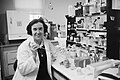
 United States of America
Explanation
Hormones inside our body are so tiny in amount that ordinary tools cannot measure them easily. Dr. Yalow invented a way to attach a “radioactive tag” to a hormone and then measure its glow to find out how much is there. Because the tag glows like bright sand, even a very small amount can be detected, helping doctors discover illnesses early. Thanks to this method, tests for diabetes and growth problems became simple and many lives have been saved. Today it is a standard blood test in hospitals all over the world. It is a famous example of how science improves everyday life.
Related Keywords
radioimmunoassay
Radioimmunoassay quantifies picogram-level substances by exploiting competitive binding between antibodies and radiolabeled antigens. Developed in the 1960s by Yalow and colleagues, it dramatically increased the sensitivity of clinical testing. Isotopes such as 125I and 3H are employed, and radioactivity is read with gamma or liquid-scintillation counters. RIA was first applied to insulin and later to thyroid hormones, sex steroids and viral antigens. Although radiation safety measures are needed, high specific activity allows exceptional detection power. It is considered the progenitor of modern immunoassays such as ELISA and CLIA.
antibody
Antibodies are proteins produced by the immune system to recognize pathogens or foreign substances. In RIA, the specificity of antibody–antigen binding is harnessed to quantify concentration differences. Polyclonal antibodies are often generated by immunizing rabbits or goats with the antigen. Higher-affinity antibodies improve assay sensitivity, so Yalow optimized antigen dose, immunization schedule and adjuvant composition. Hybridoma technology now allows easy production of monoclonal antibodies, enhancing assay reproducibility. Antibody engineering extends beyond diagnostics to therapeutic applications.
radioisotope
Radioisotopes are isotopes whose nuclei are unstable and emit radiation. In RIA, 125I (gamma emitter) and 3H (beta emitter) are commonly used, chosen for their half-life and radiation energy characteristics. Radiolabeling allows detectors to measure even trace amounts of substances. Labeling reactions employ methods such as the chloramine-T or Bolton–Hunter techniques, followed by HPLC purification. Work must be performed in radiation-controlled areas with shielding and dosimetry. Use of radioisotopes is also expanding in imaging modalities like PET and SPECT.
insulin
Insulin is a peptide hormone secreted by pancreatic β-cells that lowers blood glucose. Yalow’s first RIA quantified insulin in as little as 1 mL of serum at picogram levels, enabling precise classification of diabetes (type 1 vs. type 2) and evaluation of insulin resistance. Detailed analysis of insulin secretion curves is now combined with oral glucose tolerance tests and clamp techniques. Therapeutically, a spectrum of preparations from rapid- to long-acting has been developed, and fully closed-loop pump–sensor systems are emerging. Basic research continues to elucidate receptor tyrosine-kinase pathways and GLUT4 translocation mechanisms.
sensitive measurement
Sensitive measurement refers to analytical techniques that lower detection limits and accurately quantify trace constituents. RIA achieved detection in the femtomolar range, making it one of the earliest highly sensitive methods in life science. Greater sensitivity reduces sample volume, enables clinical use of rare biomarkers and improves pharmacokinetic precision. Mass spectrometry, next-generation sequencing and single-cell analyses now advance sensitivity by other means. As sensitivity increases, noise and cross-reactivity become more problematic, so blanks and statistical corrections are essential. Sensitive measurement is expanding into personalized medicine and environmental monitoring.
blood hormone concentration
The amount of hormones in blood is a key indicator of physiological status and disease. Previously measurable only by laborious animal bioassays, RIA made routine testing possible. Time-course profiles reflect circadian rhythms, meals and stress. Clinically, blood hormone levels guide thyroid function tests, prenatal screening and infertility monitoring. Data feed into models of homeostasis and feedback control, clarifying endocrine disease pathophysiology. Ultra-sensitive ELISAs and LC-MS/MS now allow even more precise quantification.