1987 Nobel Prize in Physiology or Medicine
Reason for Award
for his discovery of the genetic principle for generation of antibody diversity
Laureates
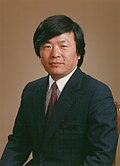
 Japan
Japan
Explanation
Our bodies make special proteins called antibodies that attack germs like bacteria and viruses. There are countless kinds of antibodies, each shaped to fit a specific germ. Dr. Susumu Tonegawa wondered how the body could create so many different antibodies. He discovered that tiny pieces of DNA inside our cells shuffle like puzzle pieces to build new plans for antibodies. Thanks to this DNA shuffling, our bodies can defend us against many different germs every day.
Related Keywords
antibody
A Y-shaped protein secreted by the immune system to neutralize pathogens and toxins. Its variable region binds specifically to antigens, while the constant region activates complement or binds phagocytes. Antibodies participate in infection defense, allergies, and autoimmunity, and they are widely used as therapeutic and diagnostic agents. Understanding antibodies is fundamental for antibody-based therapies and diagnostics.
gene rearrangement
A somatic process in which DNA segments are cut and rejoined, altering gene order. In the immune system, antibody and T-cell receptor genes rearrange to generate diverse receptor repertoires. It is irreversible, with each lymphocyte clone retaining its unique sequence. Gene rearrangement is also exploited as a tumor marker and for clonal tracing.
V(D)J recombination
An enzymatic process in B and T cells that assembles V, D, and J gene segments to create variable regions. The RAG1/2 complex recognizes recombination signal sequences, introduces DNA double-strand breaks, and rejoins ends via nonhomologous end joining. The 12/23 rule ensures correct segment pairing, and combinatorial plus junctional diversity generate the vast antibody and TCR repertoire.
immunoglobulin gene
A family of genes encoding antibodies, consisting of V, D, J, and C segments for heavy and light chains. In germline cells segments are separated; during B-cell maturation they rearrange. Additional modifications such as isotype switching and somatic hypermutation further diversify function and affinity. Sequencing immunoglobulin genes is vital for vaccine design and therapeutic antibody development.
B cell
A lymphocyte lineage differentiating in the bone marrow and producing antibodies. B cells display a B-cell receptor; upon antigen recognition they activate and differentiate into plasma cells. In germinal centers they undergo somatic hypermutation and class switching to produce high-affinity antibodies. They are central to vaccine memory and implicated in autoimmune diseases.
adaptive immunity
The part of the immune system that remembers specific foreign substances and mounts a rapid, strong response upon re-exposure. It is mediated primarily by B and T cells, responsible for antibody production and cellular immunity. V(D)J recombination and clonal expansion generate diverse receptors conferring antigen specificity. Adaptive immunity underlies vaccination and is harnessed in cancer immunotherapy.
variable region
The N-terminal portion of antibodies and TCRs that forms the antigen-binding site. Its amino-acid sequence is highly diverse, with hypervariable loops such as HCDR1-3 and LCDR1-3 conferring specificity. Sequence diversity arises from V(D)J recombination and somatic hypermutation, driving affinity maturation. Structural analysis of variable regions informs drug and antibody engineering.
clonal selection theory
A foundational immunological theory stating that lymphocyte clones specific for an antigen are selected to proliferate and differentiate upon stimulation. Proposed by Burnet, it gained molecular support from Tonegawa’s discovery of gene rearrangement. The theory underpins concepts of self–nonself discrimination and immune tolerance, influencing fields from vaccinology to cancer immunotherapy.