1988 Nobel Prize in Physiology or Medicine
Reason for Award
for their discoveries of important principles for drug treatment
Laureates
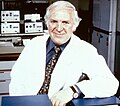
 United Kingdom of Great Britain and Northern Ireland
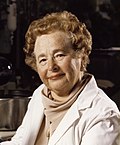
 United States of America
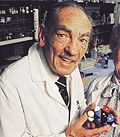
United States of America
Explanation
Medicines work because they stick to special spots inside our bodies. Mr. Black invented a heart-calming medicine called a beta blocker, and Ms. Elion and Mr. Hitchings figured out how to make medicines that aim only at sick cells. Thanks to them, doctors now have more life-saving drugs.
Related Keywords
beta blocker
Drugs that block sympathetic β-receptors, lowering heart rate and blood pressure. Widely used for angina and hypertension.
H2 receptor antagonist
Agents that block histamine H2 receptors in parietal cells, reducing gastric acid secretion and revolutionizing peptic-ulcer therapy.
rational drug design
A strategy in which a molecular target is defined first and compounds are then designed to fit it, moving drug discovery beyond random screening.
antimetabolite
Synthetic analogues of natural metabolites that competitively block metabolic pathways, selectively killing cancer cells or microbes.
purine metabolism
The biosynthesis and breakdown of purine bases, building blocks of DNA and ATP. Inhibiting it halts cell division, making it an anticancer target.
propranolol
The first clinical beta blocker. It lowers myocardial oxygen demand and reduces heart-attack risk.
cimetidine
The first H2 antagonist, launched in 1976, enabling medical rather than surgical treatment of peptic ulcers.
6-mercaptopurine
A purine analogue used to induce remission in acute lymphoblastic leukemia by inhibiting DNA synthesis in leukemic cells.
acyclovir
An antiviral drug selectively activated by herpes-virus thymidine kinase, achieving low toxicity to host cells.
receptor antagonist
A class of drugs that block ligand binding to receptors and inhibit signal transduction, introducing the idea of functional selectivity.