1995 Nobel Prize in Physiology or Medicine
Reason for Award
for their discoveries concerning the genetic control of early embryonic development
Laureates
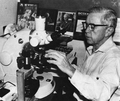
 United States of America

 Germany

United States of America
Explanation
Before we are born, our bodies start from a tiny speck inside our mother. That speck divides into many cells and decides where the head, tummy, arms and legs should grow. Mr. Lewis, Ms. Nüsslein-Volhard and Mr. Wieschaus used a small fly called the fruit fly to find the “blueprint genes” that tell each part where to form. When these genes break, wings can turn into legs or body stripes can change. By studying this, scientists learned how people and animals grow into the right shapes. Their work also helps us look for causes of diseases and new ways to heal injuries.
Related Keywords
homeotic genes
A set of genes that determine where body segments and organs form. Mutations can swap organ identity, such as turning wings into legs. They are arranged in clusters on DNA and display colinearity: expression order mirrors chromosomal order along the anterior–posterior axis. Highly conserved as Hox clusters in vertebrates, including humans. They are key to understanding morphological diversity during evolution.
Hox genes
A subset of homeotic genes encoding transcription factors with a conserved 180-bp homeobox. They encode positional information from head to tail and control limb and vertebral development. Gene duplications and transpositions during evolution generated body-plan diversity among species. Mis-expression is linked to developmental disorders and cancers, underscoring medical relevance. Hox sequences also serve as molecular clocks in phylogenetic studies.
genetic screening
A method that introduces random mutations and identifies causal genes by observing phenotypes. In fruit flies, short generation time and large progeny enable large-scale screens. Diverse mutagens such as EMS or P-elements are used. Systematic analysis allows comprehensive elucidation of biological processes and discovery of previously unknown genes. Medically, genetic screens are essential for modeling diseases in animals.
Drosophila melanogaster
A 3-mm long fly that is one of the most important model organisms in genetics and developmental biology. It has a fully sequenced genome, abundant mutant lines and powerful genetic tools. Roughly 60% of its genes are homologous to human genes, including many disease-related ones. Generation time is about 10 days and husbandry is inexpensive. Numerous Nobel-winning discoveries have used Drosophila, making it invaluable from basic to applied research.
segmentation
The process by which an embryo produces repeated structural units called segments. In insects it yields body stripes; in vertebrates it corresponds to somites, precursors of vertebrae. Genetic cascades progressively set boundaries from coarse to fine resolutions. It involves rhythmic “segmentation clocks” and morphogen gradients. Evolutionary modifications of segmentation contribute to diverse body plans.
gap genes
A set of early expressed genes defining broad embryonic domains; mutants lack contiguous segments. They interpret concentration information from maternal factors like bicoid and hunchback. Prototypical gap genes include Krüppel and knirps. Their proteins act as transcription factors controlling downstream pair-rule genes. Threshold responses to morphogen gradients make them a classic model for pattern formation.
pair-rule genes
Genes that control every other embryonic segment; mutants lose even or odd stripes. Classic examples are even-skipped and fushi tarazu. Their periodic transcription domains are set by composite enhancers receiving inputs from gap genes. The resulting transcription factors further subdivide patterns by activating segment-polarity genes. They are a model for integrating temporal rhythms with spatial information.
segment-polarity genes
Genes that establish anterior–posterior polarity within each segment. They include many intercellular signaling molecules such as engrailed and wingless. Mutations blur segment borders and cause mirror-image duplications. They act through conserved pathways like Hedgehog to lock in cell fates. Their study laid the groundwork for signaling research in organogenesis and cancer.
maternal-effect genes
Genes whose mRNAs or proteins are deposited in the egg by the mother and set the embryo’s initial pattern. The embryo’s phenotype reflects the mother’s genotype, deviating from Mendelian inheritance. Classic examples bicoid and nanos form gradients at opposite poles. They act as on/off switches for downstream gap genes. Understanding them is key to spatiotemporal control in early development.
developmental biology
The study of how organisms acquire shape and function from fertilization to adulthood. Major themes include cell differentiation, pattern formation and organogenesis. It integrates genetics, molecular biology and imaging, and recently interfaces with single-cell analysis and regenerative medicine. Discoveries in model organisms translate into human medicine, spawning new strategies for regeneration and cancer therapy. From an evolutionary viewpoint it has developed into Evo-Devo, unraveling the basis of morphological diversity.