2001 Nobel Prize in Physiology or Medicine
Reason for Award
for their discoveries of key regulators of the cell cycle
Laureates
 United States of America
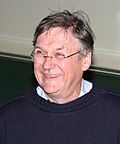
 United Kingdom of Great Britain and Northern Ireland
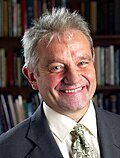
United Kingdom of Great Britain and Northern Ireland
Explanation
The cells that build our bodies multiply by splitting in a special rhythm called the “cell cycle.” Leland Hartwell, Tim Hunt, and Paul Nurse found the important switches that tell the cell when to move to the next step. These switches are proteins like “cyclins,” acting like red and green traffic lights that shout “Go!” or “Stop!” to the cell. Thanks to their discovery, scientists understand better why cells sometimes grow at the wrong time and form cancer. It also helps doctors invent new ways to find sickness early and create medicines.
Related Keywords
cell cycle
A periodic process in which a cell grows, replicates its DNA, and divides into two daughter cells. It consists of G1, S, G2, and M phases, each tightly regulated by specific molecular factors.
cyclin
A family of proteins whose concentration oscillates during the cell cycle and activates CDKs upon binding. Degradation of cyclin B triggers the exit from mitosis, acting as a molecular timer.
CDK (cyclin-dependent kinase)
A serine/threonine kinase activated by binding to cyclins that phosphorylates substrate proteins. Functions as the engine driving progression through the cell cycle.
checkpoint
A surveillance mechanism that monitors DNA damage or misaligned chromosomes and temporarily halts the cycle if problems are detected. Located at key transitions such as G1/S and G2/M.
ubiquitination
A post-translational modification that covalently attaches ubiquitin to proteins, marking them for proteasomal degradation or functional alteration. Essential for cyclin destruction and ensures unidirectionality of the cell cycle.
model organism (yeast)
Budding yeast and fission yeast are genetically tractable organisms that became prime models for cell-cycle research. They share many conserved genes with humans, serving as a bridge to translate basic findings into biomedical knowledge.