2012 Nobel Prize in Physiology or Medicine
Reason for Award
for the discovery that mature cells can be reprogrammed to become pluripotent
Laureates

 United Kingdom of Great Britain and Northern Ireland
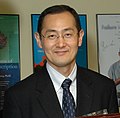
 Japan
Japan
Explanation
Cells in our bodies usually have fixed jobs, like skin or muscle. Sir John Gurdon and Dr. Shinya Yamanaka showed that even these grown-up cells can be turned back into baby-like cells. Gurdon put the nucleus of a frog gut cell into an empty egg and got a tadpole. Yamanaka added four genes to a skin cell and made a special stem cell called an iPS cell. Thanks to this, scientists can study diseases and may one day repair organs. It is like taking hardened clay, softening it again, and reshaping it into something new.
Related Keywords
pluripotency
Pluripotency is the ability of a cell to differentiate into almost all somatic lineages. It is characteristic of early inner-cell-mass cells, embryonic stem cells and induced pluripotent stem cells. Key genes include Oct4, Sox2 and Nanog, and the chromatin remains globally open. Markers such as alkaline phosphatase activity and SSEA-1/4 antigens are commonly used. Controlling the acquisition and maintenance of pluripotency is essential for regenerative medicine and disease modeling.
cellular reprogramming
Cellular reprogramming encompasses techniques that reset a differentiated cell to another fate via gene delivery or chemical cues. Somatic cell nuclear transfer and OSKM-mediated iPS induction are prime examples. Reprogramming proceeds through DNA demethylation, histone-mark switching and 3-D chromatin reorganization. Efficiency depends on cell type, cell-cycle state and p53 activity. Because it circumvents many ethical issues, the approach is poised for applications in drug discovery and personalized medicine.
induced pluripotent stem cell
iPS cells are artificially generated pluripotent stem cells produced from somatic cells via Yamanaka factors. They possess self-renewal and differentiation capacities similar to ES cells but avoid ethical issues because no embryos are used. Patient-specific iPS cells can be differentiated to create disease-specific in-vitro models. HLA-matched iPS banks are being established and clinical graft trials have begun. Challenges include genomic instability, tumorigenicity and residual immunogenicity, prompting vector improvements and stringent quality control.
somatic cell nuclear transfer
Somatic cell nuclear transfer (SCNT) restores totipotency by transferring a differentiated nucleus into an enucleated oocyte. Gurdon’s frog experiments and the cloning of Dolly the sheep are landmark examples. Oocyte cytoplasm harbors reprogramming factors that rapidly reset histone marks and DNA methylation. Success rates depend on species and donor cell condition, and mammalian clones often show developmental abnormalities. SCNT remains a valuable tool for dissecting epigenetic erasure mechanisms present in oocytes.
transcription factor
Transcription factors are proteins that bind specific DNA sequences to regulate gene expression. Factors such as OSKM that dictate cell fate are termed master transcription factors. Multiple TFs cooperate to establish enhancers and recruit chromatin-remodeling complexes, thereby activating or silencing transcription. Mutations or misexpression can cause developmental disorders and cancer. Genome-wide techniques like ChIP-seq and CUT&RUN are used to study transcription-factor binding landscapes.
epigenetic reprogramming
Epigenetic reprogramming reorganizes reversible chemical marks such as DNA methylation and histone modifications to reset gene-expression profiles. It occurs prominently during early development, germ-cell formation, SCNT and iPS induction. Key events include TET-mediated 5-methylcytosine oxidation, removal of H3K27me3 and changes in chromatin accessibility. Incomplete reprogramming leads to developmental defects or low differentiation efficiency. Chemical inhibitors and CRISPR-dCas9 epigenetic tools are employed to study and enhance this process.