1937 Nobel Prize in Chemistry(1)
Reason for Award
for his investigations on carbohydrates and vitamin C
Laureates
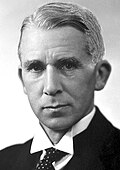
 United Kingdom of Great Britain and Northern Ireland
Explanation
Carbohydrates, found in foods like rice and bread, give our bodies energy. Dr. Haworth studied what exact shapes these carbohydrates have. He also discovered how the little pieces of vitamin C are linked together to make a ring‐shaped molecule. Knowing the shape means factories can copy it and doctors can use it as medicine. Today’s vitamin C tablets and fortified drinks are possible because of this discovery. By revealing how food works on the tiny molecular level, he helped us stay healthier.
Related Keywords
carbohydrate
A class of compounds that serve as a primary energy source and are formed by condensation of monosaccharides. Their diverse structures enable functions such as energy storage, molecular recognition and cell signaling. Haworth’s work established the cyclic nature and isomerism of carbohydrates, providing a foundation for carbohydrate chemistry.
vitamin C
Chemically known as ascorbic acid, it is a strong reducing agent essential for collagen synthesis and iron absorption. Haworth’s structural elucidation enabled synthetic production, leading to its widespread use as supplements and preservatives.
ascorbic acid
The chemical form of vitamin C containing an enol-lactone ring. It exhibits antioxidant activity via reversible conversion to dehydroascorbic acid. Knowing its structure accelerated target-oriented organic synthesis.
Haworth projection
A drawing method that represents the stereochemistry of monosaccharides in a planar form. The ring is viewed from the side, with substituents above or below the plane indicating spatial orientation. It remains a standard notation in textbooks and research papers alike.
stereochemistry
The branch of chemistry dealing with the three-dimensional arrangement of atoms in molecules. Isomeric differences can drastically affect physical properties and biological activity. Haworth’s demonstration of anomeric isomers in sugars highlighted the importance of stereochemistry.
synthetic vitamin
Vitamins produced on an industrial scale by chemical methods. They allow a steady supply independent of natural sources, benefiting public health and animal feed fortification. Vitamin C was among the first success stories.