1946 Nobel Prize in Chemistry(1)
Reason for Award
for the discovery that enzymes can be crystallized
Laureates
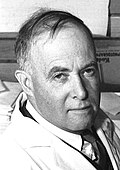
 United States of America
Explanation
Inside our bodies, tiny workers called enzymes break down food and make energy. Long ago, scientists did not clearly know what kind of substance enzymes were. Mr. Sumner took the enzyme urease from beans and turned it into shiny crystals that looked like grains of salt. If something can form crystals, it must be made of many identical molecules, so this proved that enzymes are real chemical substances. The work also showed that enzymes are proteins, bringing the mystery of life much closer to everyday science. Today this discovery helps in making medicines and food products.
Related Keywords
enzyme
Proteins that catalyze biochemical reactions in living organisms. They can accelerate reactions by millions of times yet remain unchanged after the reaction.
crystallization
The process in which molecules arrange into an ordered lattice and become solid. It is crucial for confirming high purity and preparing samples for X-ray analysis.
urease
A nickel-containing enzyme that hydrolyzes urea into ammonia and carbon dioxide. It is famous as the first enzyme ever crystallized by Sumner.
protein
Macromolecules composed of chains of amino acids. They perform diverse functions such as enzymes, antibodies, and hormones.
purity
A measure of how little the sample is contaminated with other chemical species. Sumner’s crystals proved they contained only one protein species.
X-ray crystallography
A technique that determines atomic arrangements by analyzing X-ray diffraction patterns from crystals. It became the main route for elucidating enzyme 3-D structures.
jack bean
A legume native to South America (Canavalia ensiformis). It contains abundant urease, making it a classic source for enzyme studies.
catalysis
The action of lowering activation energy to accelerate a chemical reaction. Enzymes are the most efficient catalysts known in living systems.