1946 Nobel Prize in Chemistry(2)
Reason for Award
for the crystallization of enzymes and virus proteins
Laureates
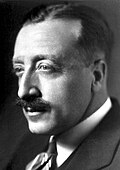
 United States of America
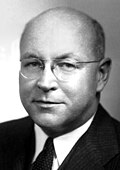
United States of America
Explanation
Scientists Mr. Northrop and Mr. Stanley invented ways to turn enzymes and virus proteins into beautiful crystals. This let them study the substances closely and discover that viruses, too, are made of proteins. Examples they worked with include the digestive enzyme pepsin and the tobacco mosaic virus that causes disease in plants. The crystals looked like tiny clear sugar grains and sparkled in light. Having the invisible tiny world sitting in your hand made many new experiments possible. Thanks to this finding, making medicines and vaccines has become much easier.
Related Keywords
pepsin
An acidic protease that breaks down proteins in the stomach. One of the first enzymes crystallized by Northrop.
trypsin
A pancreatic basic protease. Crystallization enabled precise molecular-weight determination and active-site studies.
Tobacco mosaic virus
An RNA virus that causes mosaic disease in plants. Stanley first crystallized it, demonstrating that viruses are material entities.
virus protein
Proteins that form the virus particle and mediate host binding and genome protection. Highly pure samples are essential for vaccine research.
enzyme purification
The process of separating a target enzyme from other molecules so its activity and properties can be studied. Crystallization is considered proof of ultimate purity.
chromatography
A technique that separates mixtures based on differential movement between stationary and mobile phases. It is indispensable in protein purification before or after crystallization.
X-ray diffraction
A method that determines molecular structures by analyzing the scattering pattern produced when X-rays strike a crystal. It cannot be performed without pure crystals.
structural biology
A field studying the relationship between three-dimensional structures and functions of biomacromolecules. Crystallization technology fueled its growth.
immunology
The science of how organisms recognize and eliminate pathogens. Crystallization of virus proteins aided antibody studies.
virology
The field that studies virus structure, replication, and pathogenicity. Stanley’s work is considered a starting point of modern virology.